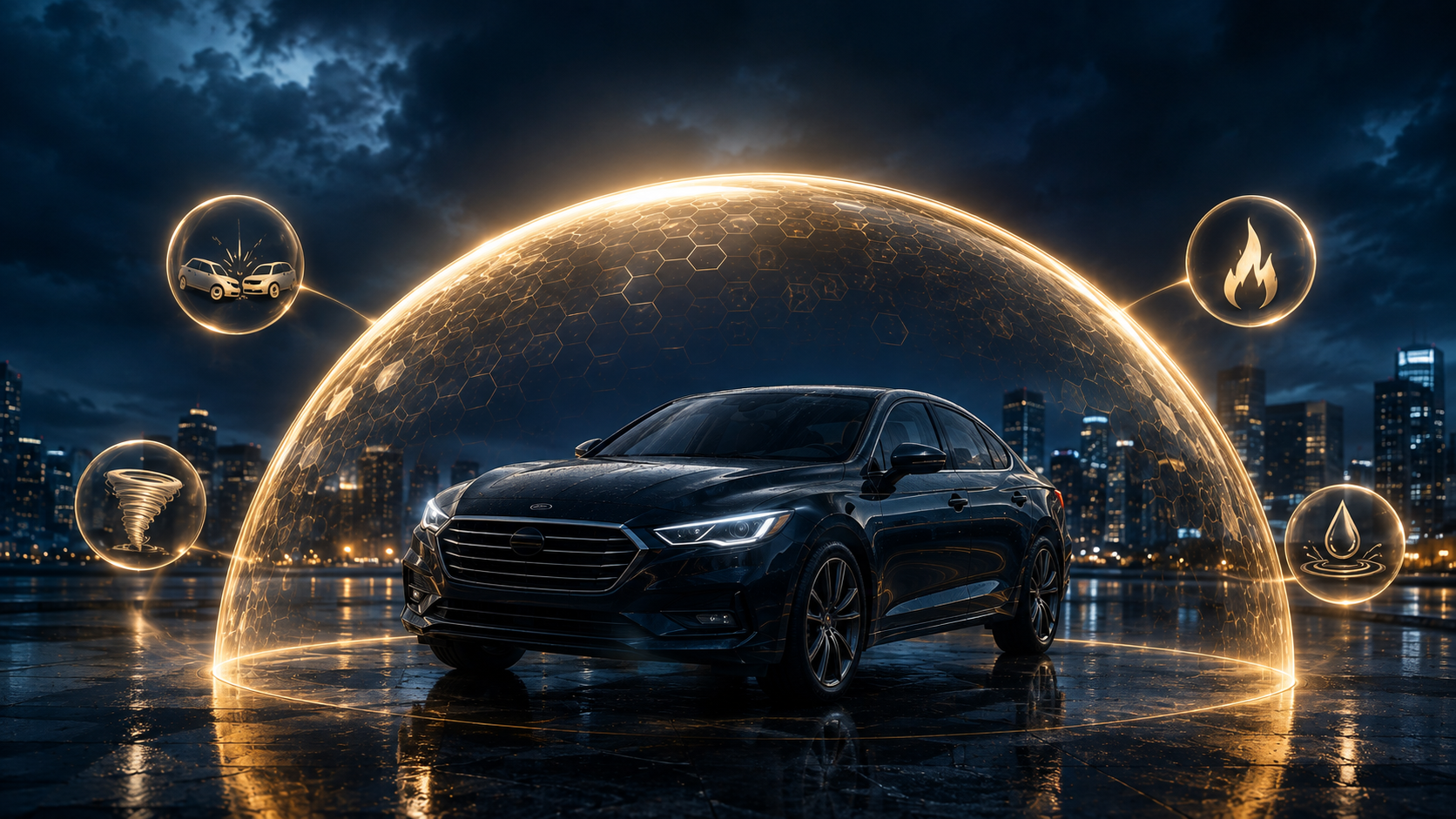
Car insurance can cover injuries and property damage you cause to others, damage to your own vehicle, certain medical expenses, and losses involving uninsured or underinsured drivers. Exactly what is covered depends on the coverages you buy, your policy limits and deductibles, the circumstances of the loss, and state law. A basic liability policy provides much less protection than a policy that also includes collision, comprehensive, and optional coverages.
Key Takeaways
- Liability insurance generally covers qualifying injuries and property damage you cause to other people.
- Collision coverage generally pays for covered damage to your own vehicle caused by a collision.
- Comprehensive coverage generally covers non-collision events such as theft, fire, hail, flooding, vandalism, or animal impacts.
- Uninsured motorist, underinsured motorist, medical payments, and personal injury protection may provide additional protection depending on your state and policy.
- Car insurance does not cover everything. Limits, deductibles, exclusions, vehicle use, and optional coverage choices can all affect a claim.
What Does a Standard Car Insurance Policy Cover?
There is no single auto insurance package that every U.S. driver receives. A policy is built from individual types of coverage, and each coverage handles a different financial risk.
For example, liability insurance is designed primarily to protect you against covered claims from other people. Collision and comprehensive coverage are designed primarily to protect your own insured vehicle. Medical and uninsured motorist coverages address other risks.
The following table shows how the major coverages differ.
| Coverage | What It Generally Covers | Protects Your Car? | State Requirement |
|---|---|---|---|
| Bodily injury liability | Covered injuries you cause to other people. | No. | Required in many states; rules vary. |
| Property damage liability | Covered damage you cause to another person’s vehicle or property. | No. | Required in many states; rules vary. |
| Collision | Covered damage to your vehicle from a collision with another vehicle or object. | Yes. | Generally optional by state law; a lender or lessor may require it. |
| Comprehensive | Covered non-collision losses such as theft, fire, severe weather, flooding, vandalism, or animal impacts. | Yes. | Generally optional by state law; a lender or lessor may require it. |
| Uninsured/underinsured motorist | Certain losses caused by drivers with no insurance or insufficient insurance. | Depends on the coverage. | Required in some states and optional in others. |
| PIP or medical payments | Certain medical or injury-related expenses for covered people. | No physical damage coverage. | Availability and requirements vary by state. |
The simplest way to think about it: liability coverage is primarily about damage or injuries you cause to others. Collision and comprehensive are the main coverages that protect your own insured vehicle.
What Does Liability Insurance Cover?
Liability coverage can protect you financially when you are legally responsible for a covered auto accident. It usually has two main parts: bodily injury liability and property damage liability.
Bodily Injury Liability
Bodily injury liability generally covers qualifying injuries you cause to other people. Depending on the claim, covered damages can include medical expenses and other amounts for which you are legally responsible.
This coverage has limits. If a serious accident results in covered damages above your available liability limit, the policy does not automatically expand to pay the excess amount.
Property Damage Liability
Property damage liability generally covers qualifying damage you cause to property belonging to another person.
That can include:
- Another driver’s car.
- A fence.
- A wall or building.
- A utility pole.
- Other property damaged in a covered accident.
Property damage liability does not normally pay to repair your own vehicle. You would typically look to collision coverage for qualifying collision damage to your own insured car.
What Does Collision Insurance Cover?
Collision insurance generally covers physical damage to your insured vehicle when it collides with another vehicle or an object.
Examples can include:
- Hitting another vehicle.
- Hitting a tree, guardrail, or other object.
- Certain single-vehicle crashes.
- Vehicle rollover.
- Other covered collision damage described in your policy.
Collision coverage normally has a deductible. If the damage is covered, the deductible reduces the amount the insurer pays.
Collision is generally optional under state insurance law. However, if you finance or lease a vehicle, your lender or lessor may require physical damage coverage as part of the agreement.
What Does Comprehensive Car Insurance Cover?
Comprehensive insurance is designed for covered physical damage to your vehicle caused by events other than a collision. It is sometimes called other than collision coverage.
Common examples include:
- Theft: Your insured vehicle is stolen.
- Vandalism: Someone intentionally damages the vehicle.
- Fire: Your vehicle suffers covered fire damage.
- Hail and severe weather: A storm damages the vehicle.
- Flooding: Your vehicle sustains covered flood damage.
- Falling objects: A branch or another object falls onto the vehicle.
- Animal impacts: Your vehicle hits a deer or another animal.
Like collision insurance, comprehensive coverage generally includes a deductible and is usually optional unless required under a financing or lease agreement.
Does Car Insurance Cover Medical Bills?
It can, depending on the coverage involved and the state where the policy is issued.
Medical payments coverage, commonly called MedPay, can help pay certain medical expenses for covered drivers or passengers following an accident.
Personal injury protection, or PIP, may cover medical expenses and can provide additional benefits such as certain lost wages or funeral expenses, depending on state law and policy terms.
The availability and requirements for these coverages vary considerably by state. They should not be assumed to work identically nationwide.
Does Car Insurance Cover Uninsured Drivers?
Uninsured and underinsured motorist coverage can provide protection when another driver causes a covered loss but does not have adequate liability insurance.
Uninsured Motorist Coverage
Uninsured motorist coverage can apply to qualifying losses caused by a driver who does not have applicable auto insurance. Depending on the coverage and state rules, it may also apply to certain hit-and-run accidents.
Underinsured Motorist Coverage
Underinsured motorist coverage can apply when the responsible driver’s insurance is not enough to fully cover a qualifying loss.
Whether these coverages are mandatory, optional, or subject to rejection depends on state law.
Does “Full Coverage” Cover Everything?
No. “Full coverage” does not mean that every possible loss is covered.
The phrase is commonly used for a policy that combines liability coverage with collision and comprehensive coverage. It is not a standardized insurance product or a promise of unlimited protection.
Even a policy described as full coverage can still have:
- Liability limits.
- Collision deductibles.
- Comprehensive deductibles.
- Exclusions.
- Coverage conditions.
- Restrictions on how the vehicle is used.
- Optional protections that were not purchased.
Reviewing the declarations page is more useful than relying on the phrase “full coverage.” The declarations page generally shows your coverage selections, policy limits, deductibles, insured vehicles, and policy period.
What Optional Coverage Can You Add?
Some expenses require optional coverage rather than being automatically included in a standard auto policy.
Rental Reimbursement
Rental reimbursement can help with qualifying rental-car expenses while your insured vehicle is being repaired after a covered loss. Policies can impose daily and total limits.
Roadside Assistance and Towing
Roadside or towing coverage can help with certain expenses when your vehicle becomes disabled. Depending on the insurer and policy, examples may include towing or lockout assistance.
GAP Protection
If a financed vehicle is totaled, the amount an insurer pays for the covered vehicle loss can be less than the remaining loan balance. Guaranteed asset protection, commonly called GAP, is designed to address some or all of that difference according to its terms.
GAP products can be offered through insurers, lenders, dealers, or lease arrangements, so their terms can differ.
A Practical Coverage Example
Suppose you accidentally hit another vehicle at an intersection. The other vehicle has $8,000 of qualifying damage, while your own car has $5,000 of covered collision damage. Your collision deductible is $500.
Your property damage liability coverage could apply to the qualifying $8,000 loss involving the other person’s vehicle, assuming the claim falls within your policy terms and liability limit.
Your liability insurance would not normally repair your own car. If you purchased collision coverage, the calculation for your vehicle could look like this:
$5,000 covered collision damage − $500 deductible = $4,500 potential insurer payment
These figures are hypothetical and are used only to demonstrate how different coverages can apply to the same accident. Actual claim payments depend on the policy, claim evaluation, limits, deductibles, vehicle value, and circumstances of the loss.
What Does Car Insurance Not Cover?
Car insurance is not an unlimited vehicle protection plan. Some losses require different insurance, optional coverage, or must be paid by the vehicle owner.
- Routine maintenance: Regular servicing and upkeep are not what auto insurance is designed to cover.
- Normal wear: Insurance is not intended to pay simply because a vehicle deteriorates through ordinary use.
- Your remaining loan balance: A total-loss settlement may not equal what you still owe; GAP protection is a separate consideration.
- Rental expenses without applicable coverage: Rental reimbursement may need to be purchased separately.
- Roadside expenses without applicable coverage: Towing or roadside assistance may be optional.
- Specialty vehicles: Motorcycles, ATVs, RVs, and commercial vehicles generally require insurance designed for those risks rather than relying on a standard personal auto policy.
- Certain commercial or rideshare use: Personal auto policies may exclude business or livery use, potentially creating a coverage gap without appropriate protection.
Every policy is different. The exclusions, definitions, and endorsements in the actual insurance contract determine whether a particular claim is covered.
Does Car Insurance Cover Rideshare or Delivery Driving?
A standard personal auto policy should not automatically be assumed to cover driving for a rideshare or other commercial service.
Personal auto policies commonly contain restrictions or exclusions related to livery or commercial activity. Coverage gaps can arise at different stages of rideshare driving, including periods when a driver is logged into an app but has not yet accepted a passenger.
Insurers may offer rideshare endorsements or other solutions, and transportation network companies can provide their own insurance during certain periods. The exact coverage and limits vary.
If you use your vehicle for rideshare, delivery, or other paid driving, tell your insurer and confirm which policy applies before relying on your personal auto coverage.
How Coverage Limits Affect What Insurance Pays
Having the right type of coverage does not necessarily mean every dollar of a loss will be paid. Coverage limits establish the maximum insurance available for a covered claim or category of loss, subject to the policy.
For example, if your property damage liability limit is lower than the covered property damage you cause, the policy may not provide enough insurance for the entire loss.
This is an important distinction between meeting your state’s minimum insurance requirement and choosing liability limits that fit your broader financial situation.
How Deductibles Affect Your Coverage
A deductible is the portion of certain covered losses that you agree to pay yourself. Deductibles commonly apply to collision and comprehensive claims.
Choosing a higher deductible can reduce the premium for those coverages, but it also means taking on more of the cost when you file a covered claim.
For example, if your comprehensive deductible is $1,000 and a covered event causes only $700 of damage, there would generally be no payment under that coverage because the loss does not exceed the deductible.
Choose a deductible with both the premium and your ability to handle an unexpected claim in mind.
Car Insurance Coverage Requirements Vary by State
There is no single set of auto insurance requirements that applies identically across the United States. Insurance regulation is state-based.
States can differ in:
- Required liability insurance.
- Minimum coverage limits.
- Uninsured and underinsured motorist requirements.
- PIP or medical coverage requirements.
- No-fault insurance rules.
- Other financial-responsibility requirements.
Before buying: Verify current requirements with your state Department of Insurance or another official state authority. Do not assume the minimum coverage required in one state applies in another.
How to Check What Your Own Policy Covers
If you already have insurance, start with the declarations page. It provides a useful summary of the policy and generally identifies the covered vehicles, policy period, coverage types, limits, and deductibles.
Then review the full policy for definitions, exclusions, conditions, and endorsements that may change how coverage applies.
- Check liability limits. Know how much bodily injury and property damage coverage you purchased.
- Look for collision and comprehensive. Do not assume you have protection for your own vehicle.
- Check your deductibles. Know what portion of certain claims you may pay yourself.
- Review optional coverage. Look for rental reimbursement, roadside assistance, medical coverage, and uninsured motorist protection.
- Check listed vehicles and drivers. Make sure the policy information is accurate.
- Read exclusions and endorsements. They can materially change what the basic coverage descriptions mean.
Frequently Asked Questions
The Bottom Line
Car insurance can cover many different financial risks, but only if the appropriate coverage is included in your policy. Liability insurance generally addresses damage and injuries you cause to others, while collision and comprehensive coverage protect your own vehicle against different types of covered damage.
Medical payments, PIP, uninsured motorist protection, rental reimbursement, roadside assistance, and GAP-related protection can address additional risks, but availability and requirements vary.
The best way to know what your car insurance covers is to review your declarations page and policy rather than relying on general terms such as “basic insurance” or “full coverage.” Confirm your coverage types, limits, deductibles, exclusions, and state requirements before you need to file a claim.
Sources
- National Association of Insurance Commissioners, What Does Auto Insurance Cover?, 2026.
- National Association of Insurance Commissioners, Auto Insurance, Insurance Topics, updated 2025.
- National Association of Insurance Commissioners, Consumer Auto Insurance, accessed 2026.
- National Association of Insurance Commissioners, Commercial Ride-Sharing, updated 2025.