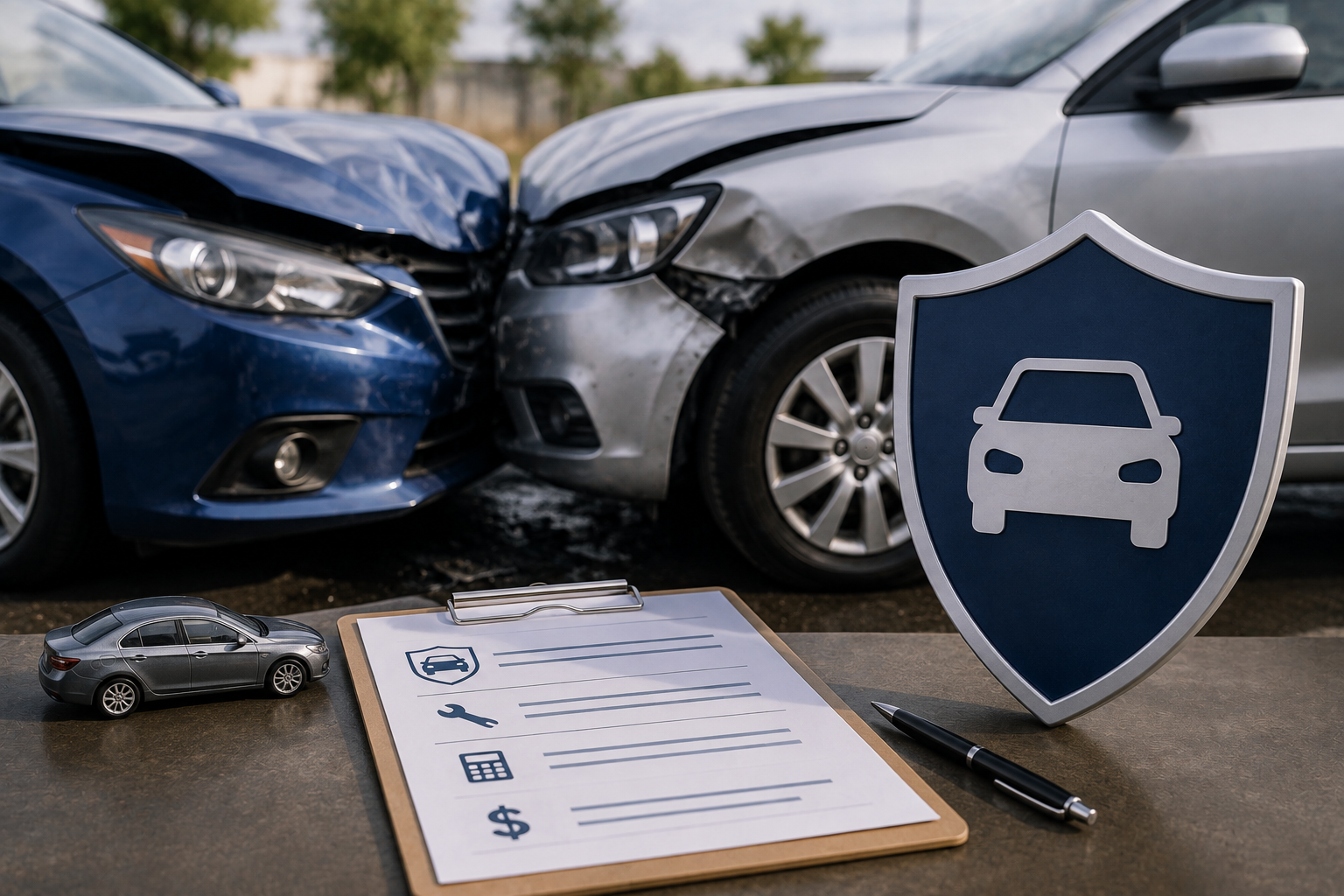
Collision coverage is auto insurance that can pay for covered physical damage to your vehicle when it collides with another vehicle or object, hits a pothole, or overturns. It generally applies regardless of who caused the crash, subject to the policy and deductible. Collision coverage is usually optional under state insurance law, although a lender or leasing company may require it while a vehicle is financed or leased.
Key Takeaways
- Collision coverage pays for covered damage to your own insured vehicle resulting from a collision or rollover.
- It generally applies whether you or another driver caused the accident, subject to exclusions and other policy terms.
- You normally choose a deductible, which is the amount of a covered collision loss you are responsible for before the insurer’s payment.
- Collision coverage is different from comprehensive coverage, which addresses many non-collision losses such as theft, hail, fire, or vandalism.
- State law generally does not require collision coverage, but lenders and lessors may require physical damage coverage on financed or leased vehicles.
What Does Collision Coverage Pay For?
Collision coverage protects the insured vehicle rather than another driver’s property. NAIC consumer guidance describes collision insurance as coverage for physical damage to your car when it collides with an object such as another vehicle or a tree.
Current NAIC guidance also identifies collisions with another car, an object, a pothole, or a rollover as examples of losses collision coverage can address. Whether a particular claim is covered still depends on the policy language and circumstances of the loss.
Collision With Another Vehicle
If your insured vehicle strikes another car or another car strikes yours, collision coverage may pay for covered damage to your vehicle. This can be useful even when fault is disputed or when you caused the accident.
Collision With an Object
Collision can also apply when the vehicle hits an object such as a tree, guardrail, rock, building, or similar obstruction. The important point is that the damage results from physical impact involving the insured vehicle.
Rollover or Upset
Collision coverage can also apply when a covered vehicle overturns. The vehicle does not necessarily have to strike another automobile for a collision claim to exist.
| Loss | Collision Coverage May Apply? | What to Know |
|---|---|---|
| You hit another car | Generally yes, for covered damage to your vehicle. | Your collision deductible generally applies. |
| Another car hits you | Generally yes. | You may also have a claim against the at-fault driver, depending on the circumstances and state law. |
| You hit a guardrail or tree | Generally yes. | Coverage applies to qualifying damage to the insured vehicle, subject to the policy. |
| Your vehicle rolls over | Generally yes. | Rollover or upset can fall within collision coverage. |
| Your car is stolen | Generally no. | Theft is generally handled by comprehensive coverage. |
| Hail damages your car | Generally no. | Weather-related damage is generally addressed by comprehensive coverage. |
How Does a Collision Deductible Work?
Collision coverage normally has a deductible. The deductible is the portion of a covered loss you are responsible for before the insurer’s payment is calculated.
For example, consider a hypothetical covered collision that causes $6,000 in repair costs and a policy with a $1,000 collision deductible. If the entire repair amount qualifies under the policy, the policyholder would generally be responsible for $1,000 and the insurer could pay the remaining $5,000. These figures are illustrative only.
Deductible choices vary by insurer. In general, selecting a higher deductible can reduce the premium because you retain more of each covered loss. A lower deductible can increase premium but reduces the amount you must absorb when a covered collision claim occurs.
Choose a deductible you could realistically pay. A higher deductible may lower premium, but the savings may be less useful if the deductible would be difficult to cover after an unexpected crash.
Does Collision Coverage Apply If You Caused the Accident?
Generally, yes. Collision coverage is designed to protect your insured vehicle, so a covered claim can apply even when you were responsible for the crash.
That is different from liability insurance. Property damage liability generally pays for covered damage you cause to someone else’s vehicle or property. Collision coverage addresses qualifying physical damage to your own vehicle.
Fault can still matter for other parts of an accident claim, including liability claims and a possible recovery against another driver. It simply is not normally a prerequisite for making a covered collision claim under your own policy.
Collision Coverage vs. Comprehensive Coverage
Collision and comprehensive coverage both protect the insured vehicle, but they address different causes of damage.
Collision generally applies when your vehicle physically collides with another vehicle or object or overturns. Comprehensive generally handles many losses that are not collisions, including theft, fire, vandalism, hail, flood, falling objects, and certain animal-related damage, depending on the policy.
| Example | Collision | Comprehensive |
|---|---|---|
| Crash with another vehicle | Generally yes | Generally no |
| Collision with a tree or guardrail | Generally yes | Generally no |
| Vehicle rollover | Generally yes | Generally no |
| Theft | Generally no | Generally yes |
| Hail or windstorm damage | Generally no | Generally yes |
| Vandalism | Generally no | Generally yes |
Is Collision Coverage Required?
Collision coverage is generally not required by state auto insurance law. State minimum insurance requirements typically focus on liability and, depending on the state, other forms of mandatory protection.
Financing can change the answer. NAIC guidance notes that lenders may require collision and comprehensive coverage when a vehicle is financed, while a lessor may impose similar requirements on a leased vehicle. The lender or leasing company has a financial interest in protecting the vehicle from physical damage.
Paying off the loan does not automatically mean dropping collision is the right decision. Once lender requirements end, the question becomes whether you want to retain the financial risk of repairing or replacing the vehicle yourself after a collision.
What Happens If Your Car Is a Total Loss?
An insurer may determine that a damaged vehicle is a total loss rather than pay to repair it. This can occur when the repair cost is too high relative to the vehicle’s value, subject to state rules and the insurer’s claim practices.
NAIC consumer guidance explains that when repairing an older vehicle would exceed its worth, the insurer may total the car and pay what the vehicle was worth rather than repair it. The settlement under a particular policy is subject to its valuation provisions, applicable deductible, state law, and claim facts.
A collision settlement also does not necessarily equal the remaining balance on your auto loan. If the vehicle’s covered value is less than the amount you still owe, collision coverage generally does not automatically pay the loan deficiency.
Collision Coverage vs. GAP Coverage
Collision coverage and guaranteed asset protection, commonly called GAP coverage, solve different problems.
Collision coverage addresses qualifying physical damage to the insured vehicle. GAP protection is designed to address certain differences between an eligible vehicle’s covered value and the amount remaining on a loan or lease after a covered total loss, subject to its own terms.
Collision does not guarantee that an auto loan will be paid off. If you owe substantially more than the vehicle is worth, review any GAP protection separately.
Does Collision Coverage Include a Rental Car?
Do not assume that buying collision coverage automatically pays for a temporary rental vehicle while your car is being repaired.
Rental reimbursement or transportation expense protection is often a separate optional coverage. NAIC consumer guidance notes that when a claim is made under your own policy, the insurer generally pays rental expenses only if you purchased the applicable rental reimbursement coverage, subject to its limits.
Review the declarations page rather than assuming rental expenses are bundled with collision.
Does Collision Cover a Hit-and-Run?
Collision coverage may pay for qualifying damage to your vehicle after a hit-and-run because it protects the insured vehicle against covered collision damage. The collision deductible may apply.
Uninsured motorist property damage coverage may also be relevant in some states, but its availability and requirements vary. Do not assume it is available everywhere or that it works the same way as collision coverage.
If another identified driver caused the crash, your insurer may have recovery rights against that driver or insurer after paying a covered collision claim. Whether and when you recover some or all of a deductible depends on the circumstances, state law, and the success of the recovery process.
When Might You Consider Dropping Collision Coverage?
There is no vehicle age at which every driver should automatically remove collision coverage. The decision depends more on the vehicle’s current value, the cost of coverage, the deductible, your finances, and whether a lender or lessor requires it.
For an older vehicle with a relatively low value, the potential insurance payment after applying a deductible may be limited. NAIC consumer guidance recommends considering the value of the vehicle because repair costs can exceed the worth of an older car.
Before dropping coverage, consider whether you could comfortably repair or replace the vehicle yourself after an at-fault accident, single-vehicle crash, or collision with an uninsured driver.
A Hypothetical Collision Coverage Example
Consider a hypothetical driver who loses control on a wet road and strikes a guardrail. The insured vehicle has $9,000 in covered repair damage, and the collision deductible is $1,000. These figures are examples only and are not national averages.
If the loss qualifies under the collision coverage and the vehicle is repairable, the driver would generally be responsible for the $1,000 deductible and the insurer could pay $8,000 of qualifying repair costs.
If the insurer instead determines that the vehicle is a total loss, the claim would be handled according to the policy’s total-loss and valuation provisions rather than simply paying the estimated repair bill.
How to Choose Collision Coverage
If collision coverage is optional for you, evaluate it based on the financial risk you would otherwise retain.
- Check financing requirements. Determine whether a lender or leasing company requires collision and comprehensive coverage.
- Estimate your vehicle’s current value. The potential claim payment is connected to the vehicle’s value and policy provisions, not what you originally paid for it.
- Compare deductible choices. Consider both premium savings and the amount you could afford after a crash.
- Review total-loss provisions. Understand how the policy determines what is payable if repairs are not economically practical.
- Check related coverages separately. Comprehensive, GAP, rental reimbursement, towing, and uninsured motorist property damage are not the same as collision coverage.
- Read exclusions and endorsements. Your policy documents determine how coverage applies to a specific claim.
Frequently Asked Questions
The Bottom Line
Collision coverage protects your own insured vehicle against qualifying damage from crashes with other vehicles or objects, pothole impacts, and rollovers. It can apply even when you caused the accident, with the policyholder generally responsible for the selected deductible.
Although collision insurance is generally not required by state law, a lender or lessor may require it. If coverage is optional for you, compare the vehicle’s value, deductible, premium, and your ability to absorb a major loss. Review comprehensive, GAP, rental reimbursement, and other coverages separately because they protect against different financial risks.
Sources
- National Association of Insurance Commissioners, What Does Auto Insurance Cover?, June 11, 2026.
- National Association of Insurance Commissioners, Consumer Auto Insurance Resources, accessed August 2026.
- National Association of Insurance Commissioners, Auto Insurance, updated September 26, 2025.
- California Department of Insurance, Automobile Insurance, accessed August 2026.