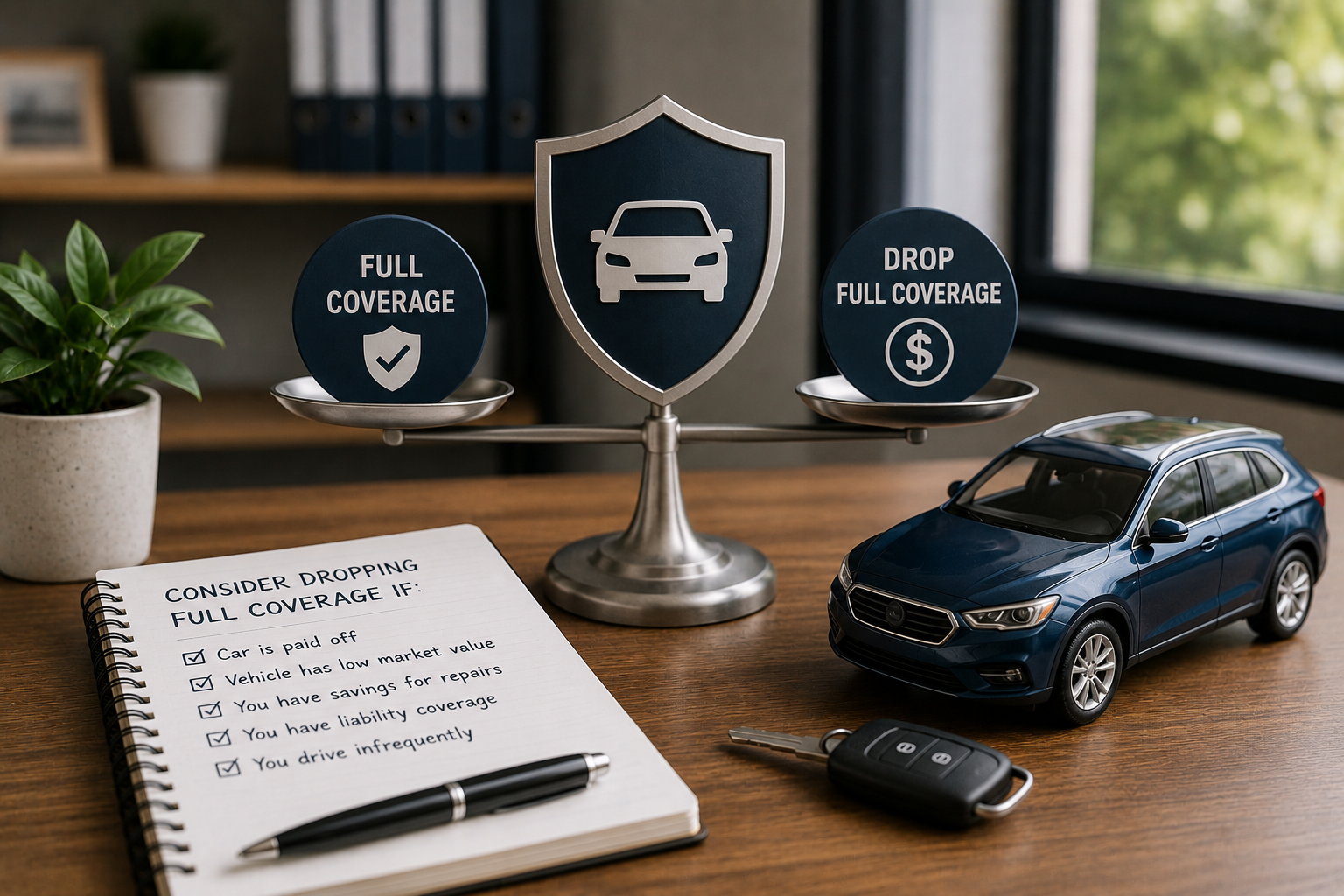
You may want to drop collision, comprehensive, or both after your vehicle is paid off when the cost of those coverages is no longer reasonable compared with the car’s current value and you could afford to repair or replace the vehicle yourself. Do not remove lender-required physical damage coverage while a loan or lease still requires it, and do not confuse dropping “full coverage” with eliminating liability or other coverage required by your state or financial situation.
Key Takeaways
- “Full coverage” is not a standardized insurance policy. The phrase commonly refers to liability coverage plus collision and comprehensive coverage, but the actual policy can include other protections.
- Collision and comprehensive are generally not required by state law, but a lender or leasing company may require physical damage coverage while it has a financial interest in the vehicle.
- Dropping collision or comprehensive can make more sense as a vehicle loses value and the possible claim payment becomes smaller relative to the cost of coverage and deductible.
- Keep physical damage coverage if replacing the vehicle yourself would create serious financial difficulty, even if the car is older.
- You do not necessarily have to drop collision and comprehensive together. Review the price and value of each coverage separately.
What Does “Full Coverage” Mean?
“Full coverage” is an informal insurance term rather than the name of one standardized policy. Two drivers who say they have full coverage can have significantly different limits, deductibles, and optional protections.
In common usage, full coverage generally includes:
- Liability coverage: Helps address covered bodily injury or property damage you cause to other people, subject to the policy and applicable state requirements.
- Collision coverage: Pays for covered physical damage to your insured vehicle from a collision with another vehicle or object, subject to your deductible and policy terms.
- Comprehensive coverage: Pays for covered non-collision damage such as theft, fire, vandalism, hail, certain weather losses, falling objects, or animal impacts, subject to the policy.
A policy may also include uninsured or underinsured motorist coverage, personal injury protection, medical payments, rental reimbursement, roadside assistance, or other coverage depending on the state, insurer, and options selected.
For that reason, deciding to “drop full coverage” should usually mean deciding whether to remove collision, comprehensive, or both—not automatically reducing every other protection on the policy.
When You May Be Ready to Drop Collision or Comprehensive
There is no universal vehicle age or mileage at which every driver should drop physical damage coverage. The decision should be based on the economics of your particular vehicle and your ability to absorb a loss.
Your Car Is Paid Off
Paying off the vehicle can remove a major obstacle to changing physical damage coverage. Lenders commonly require collision and comprehensive while a loan is outstanding because the vehicle serves as collateral.
Once the lender no longer has a financial interest in the car, you generally have more freedom to decide whether collision and comprehensive still make financial sense, subject to your policy and applicable requirements.
The Vehicle Has Relatively Little Market Value
Collision and comprehensive claim payments are tied to the value of the insured vehicle rather than what you originally paid for it. An insurer generally will not spend substantially more repairing a totaled vehicle than the vehicle was worth immediately before the loss.
As a vehicle depreciates, the maximum financial benefit you can receive from collision or comprehensive may therefore decline even while you continue paying premiums for the coverage.
The Coverage Costs a Significant Amount Relative to the Car’s Value
Find out how much of your premium is specifically attributable to collision and comprehensive. Do not compare the vehicle’s value with your entire insurance premium because liability and other protections would generally remain even if you removed physical damage coverage.
Then compare that cost with the car’s current market value and your deductible. The smaller the potential benefit becomes relative to what you pay for the coverage, the stronger the argument for self-insuring the vehicle.
You Could Comfortably Replace the Vehicle Yourself
Dropping collision or comprehensive means accepting more risk yourself. The decision is easier when you have enough accessible savings to repair the car, replace it, purchase another used vehicle, or manage without it temporarily.
A low-value vehicle can still be financially important. If losing a $5,000 car would prevent you from getting to work and you do not have $5,000 available for another vehicle, keeping physical damage coverage may still be valuable.
When You Probably Should Not Drop Full Coverage Yet
Your Loan or Lease Requires It
If your vehicle is financed or leased, check the agreement before changing collision or comprehensive coverage. A lender or lessor may require specified physical damage coverage and deductible limits.
Removing required coverage can violate the agreement. The lender may also have contractual remedies if required insurance is not maintained.
Replacing the Car Would Create Financial Hardship
Do not drop useful coverage merely because the car is several years old. Vehicle age by itself does not determine whether you can afford to absorb a total loss.
If an uninsured loss would force you into high-cost debt, prevent you from working, or create another serious financial problem, physical damage coverage may still provide meaningful protection.
The Vehicle Still Has Significant Value
A paid-off car can still be worth enough that a collision, theft, fire, hailstorm, or other covered event would create a substantial loss. Being debt-free does not automatically mean the vehicle should be self-insured.
You Have Significant Comprehensive Risks
Comprehensive can remain useful even when you are less concerned about collision damage. Theft, hail, falling objects, fire, vandalism, animal impacts, and other covered non-collision events can damage an older vehicle.
A driver who parks outdoors in an area with frequent hail, theft, severe weather, or animal strikes may evaluate comprehensive differently from someone whose vehicle is rarely exposed to those risks.
How to Compare the Cost of Coverage With Your Car’s Value
A practical review uses three numbers:
- The vehicle’s current market value.
- The annual premium attributable to collision and comprehensive.
- The deductibles attached to those coverages.
Remember that the deductible reduces what the insurer pays on a covered claim. If a car is worth only a modest amount and carries a relatively large deductible, the potential benefit from physical damage coverage may be much smaller than the vehicle’s headline market value.
Hypothetical Value Example
Assume a hypothetical paid-off vehicle has a current market value of $7,500 and a $1,000 collision deductible.
A simplified maximum collision settlement after a total covered loss could be roughly:
$7,500 vehicle value − $1,000 deductible = $6,500 simplified potential payment.
This example is illustrative only, not a national average or recommendation. Actual total-loss valuation and settlement depend on the policy, vehicle, deductible, condition, state requirements, and claim circumstances.
Now compare the cost of maintaining collision with the financial protection that coverage provides. The decision is not simply whether the premium is less than $6,500. It is whether transferring that risk to the insurer is worth the recurring cost to you.
You Can Consider Collision and Comprehensive Separately
Dropping “full coverage” does not necessarily require treating collision and comprehensive as one decision. Depending on the insurer and policy, you may be able to change one while retaining the other.
| Coverage | What It Generally Protects Against | Why You Might Keep It |
|---|---|---|
| Collision | Covered damage from collisions with vehicles or objects and certain rollover losses. | Replacing or repairing the vehicle after a crash would be financially difficult. |
| Comprehensive | Covered non-collision losses such as theft, fire, hail, vandalism, falling objects, or animal impacts. | Your vehicle has meaningful exposure to theft, weather, animals, fire, or other covered non-collision risks. |
Ask your insurer for the separate premium cost of each coverage. You may discover that one provides enough protection for its price to justify keeping it even if the other does not.
What Coverage Should You Keep?
Removing collision or comprehensive does not mean you should automatically reduce unrelated coverage.
Review separately:
- Liability coverage: Your vehicle becoming older does not reduce the amount of bodily injury or property damage you could cause to someone else.
- Uninsured and underinsured motorist coverage: Availability and requirements vary by state, but this protection addresses risks that are different from damage to your own aging vehicle.
- PIP or medical payments: These coverages address qualifying injury-related expenses and should be evaluated independently of collision and comprehensive.
- Optional services: Rental reimbursement, roadside assistance, and other options can be reviewed according to your needs and whether the underlying coverage requirements are met.
Do not equate an old car with low liability risk: The market value of your vehicle affects how valuable collision and comprehensive may be, but it does not determine how large a liability claim you could cause.
Try These Options Before Dropping Coverage Completely
If collision and comprehensive feel expensive but you are not comfortable self-insuring the vehicle, you may have alternatives.
Raise the Deductible
A higher collision or comprehensive deductible can reduce premium because you agree to absorb more of a covered loss. Choose only a deductible you could comfortably pay.
Compare Quotes With Matching Coverage
Another insurer may price the same collision and comprehensive limits differently. Compare equivalent deductibles and coverages rather than assuming your current premium is the only available price.
Ask for the Price Without One Coverage
Request quotes showing the policy with both physical damage coverages, collision removed, comprehensive removed where available, and both removed. Seeing the actual savings makes the decision more concrete.
A Practical Decision Checklist
Before changing your policy, answer these questions:
- Is the car fully paid off?
- Does a lender, lessor, or other agreement require collision and comprehensive?
- What is the vehicle worth today?
- What are my collision and comprehensive deductibles?
- How much am I paying specifically for collision?
- How much am I paying specifically for comprehensive?
- Could I replace the vehicle from savings after a total loss?
- Could I still get to work or meet family obligations if the car were suddenly gone?
- Is the vehicle particularly exposed to theft, hail, animals, vandalism, fire, or other comprehensive risks?
- Would raising the deductible or changing insurers solve the premium problem without eliminating coverage?
Decision shortcut: Dropping physical damage coverage becomes easier to justify when the car is paid off, worth relatively little, expensive to insure relative to that value, and financially replaceable without insurance. If one of those conditions is missing, keeping some or all of the coverage may still be worthwhile.
Common Mistakes When Dropping Full Coverage
Dropping Coverage Before the Loan Is Paid Off
Check the finance or lease agreement first. The fact that collision or comprehensive is not generally required by state law does not eliminate contractual insurance requirements imposed by a lender or lessor.
Using Vehicle Age as the Only Rule
Two vehicles of the same age can have very different values, repair costs, theft exposure, and importance to their owners. Evaluate your actual car rather than relying on a specific age cutoff.
Comparing the Car’s Value With the Entire Auto Premium
You would generally continue paying for liability and other retained coverages. Ask how much collision and comprehensive actually cost before deciding whether removing them produces meaningful savings.
Forgetting About the Deductible
A large deductible reduces the amount physical damage coverage may pay after a claim. Include it when comparing the possible benefit with the recurring premium.
Reducing Liability Just Because the Car Is Old
An inexpensive vehicle can still cause a severe accident. Liability limits should be evaluated according to potential third-party losses and your financial exposure rather than the value of your own car.
Frequently Asked Questions
The Bottom Line
Dropping “full coverage” usually means deciding whether collision, comprehensive, or both still provide enough financial value to justify their cost. It should not automatically mean eliminating liability or other protections that remain legally required, contractually required, or important to your finances.
The strongest case for dropping physical damage coverage is usually a paid-off vehicle with relatively little market value when the collision or comprehensive premium and deductible are substantial compared with the protection available and you could comfortably replace the car yourself.
Before making the change, verify lender or lease requirements, obtain the current vehicle value, ask your insurer for the separate cost of collision and comprehensive, review your deductibles, and decide how you would pay for another vehicle if yours were totaled or stolen tomorrow.
Sources
- National Association of Insurance Commissioners, What Does Auto Insurance Cover?, June 11, 2026.
- National Association of Insurance Commissioners, Auto Insurance, Insurance Topics, accessed August 2026.
- National Association of Insurance Commissioners, Consumer Auto, accessed August 2026.
- California Department of Insurance, Automobile Insurance Text Version, accessed August 2026.