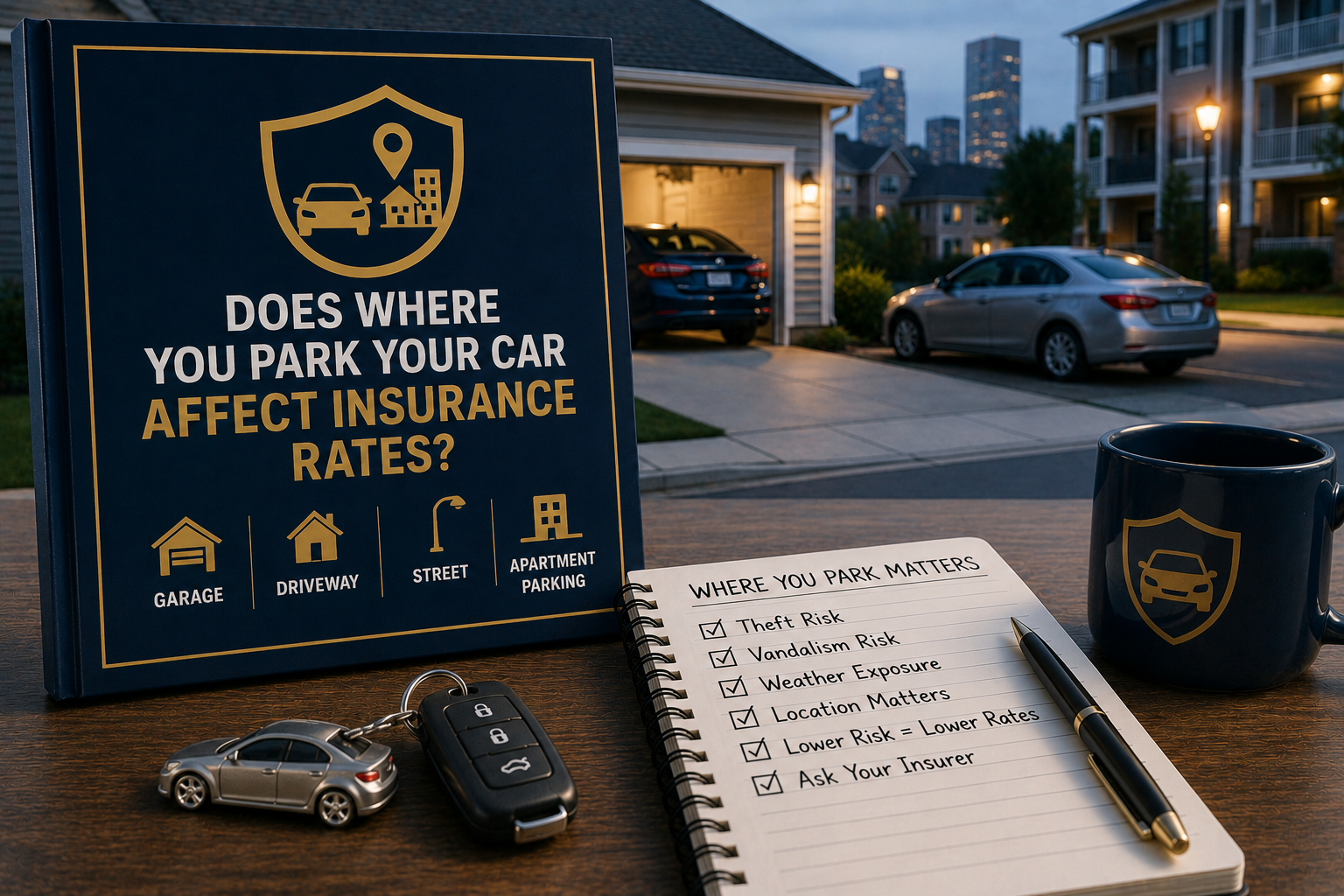
Yes. Where you regularly keep your car can affect your auto insurance rate, especially the garaging address or rating territory. Insurers commonly consider location because claims frequency and loss costs vary by area. Parking in a garage or off the street may also qualify for lower pricing with some insurers, but it is not a universal discount. State rules and insurer rating plans differ, so the effect varies from one driver and company to another.
Key Takeaways
- Your garaging location can affect your premium. Insurers commonly use geographic territory or garaging location as an auto insurance rating factor, subject to state law.
- A garage or off-street parking may help with some insurers. It can reduce exposure to certain theft, vandalism, and other losses, but a lower premium is not guaranteed.
- Street parking does not automatically mean expensive insurance. Your rate reflects many factors, including driving history, vehicle type, mileage, coverage choices, and location.
- The address generally matters more than the individual parking space. A move to a different ZIP code or rating territory can affect rates even if your car remains in a garage.
- Keep your garaging information accurate. Tell your insurer about a move or another significant change in where the vehicle is regularly kept.
Why Where You Park Can Affect Car Insurance Rates
Auto insurers price policies according to the amount of risk they expect to insure. The National Association of Insurance Commissioners identifies location as one of the main rating factors used in auto insurance. Its consumer shopping guidance also explains that a vehicle’s location or garaging address can produce a higher or lower premium based on an insurer’s claims experience in the applicable ZIP code or territory.
That means “where you park” can have two different meanings for insurance purposes:
- Garaging location: the address, ZIP code, or rating territory where the vehicle is principally kept.
- Parking arrangement: whether the vehicle is normally parked in a private garage, driveway, secured lot, open parking area, or on the street.
The first category is a widely recognized rating consideration. The second can matter with some insurers, but the way it affects pricing is less uniform. An insurer’s filed rating plan and applicable state insurance rules determine which factors can be used and how much weight they receive.
The practical distinction: Moving your car’s regular overnight location to a different city or rating territory can affect the base location-related portion of your premium. Moving the same car from a street space into a garage at the same address may or may not produce a pricing change, depending on the insurer.
Garaging Address vs. Garage Parking
The word garaging can be confusing because an insurance company’s “garaging address” does not necessarily mean that you have a physical garage. It generally refers to the location where the car is principally kept, especially overnight.
A driver who parks on the street outside an apartment building still has a garaging address. Likewise, someone whose vehicle sits in a private enclosed garage has both a garaging address and a particular parking arrangement.
| Factor | What It Means | Potential Insurance Effect |
|---|---|---|
| Garaging address or territory | Where the vehicle is principally kept | Commonly used as a rating factor, subject to state rules |
| Private enclosed garage | Car is parked inside a structure | May qualify for favorable pricing with some insurers |
| Driveway or off-street space | Car is kept away from normal street traffic | May matter to some insurers; treatment varies |
| Street parking | Car is routinely parked on a public street | May represent greater exposure to some losses, but does not automatically create a surcharge |
Does Parking in a Garage Lower Car Insurance?
It can, but not with every insurer. NAIC consumer guidance notes that parking in a garage or even parking off the street can mean lower premiums. That should not be interpreted as a universal garage discount available on every personal auto policy.
A garage can reduce exposure to some types of loss. For example, an enclosed space may provide more protection from theft, vandalism, hail, falling objects, or a passing vehicle than an exposed street space. A secure parking area may also reduce certain theft-related risks.
However, the insurer still considers the rest of the driver’s rating profile. A garage does not erase accidents, violations, high annual mileage, an expensive-to-repair vehicle, or other rating factors.
Before assuming a garage will save money: ask the insurer whether parking type is actually used in its rating plan and whether changing from street parking to a garage would change the quoted premium. The answer can differ by insurer and state.
Does Street Parking Make Insurance More Expensive?
Street parking can expose a vehicle to risks that may be less common in a private garage, including theft, vandalism, weather, falling objects, and damage caused by other vehicles. That does not mean every insurer automatically adds a specific “street-parking surcharge.”
The broader geographic location may have a larger effect. Insurers commonly evaluate loss experience by territory. Areas with greater claim frequency, theft losses, traffic density, or other loss costs may be priced differently from areas with lower expected losses.
As a result, two drivers with similar cars and driving records could receive different rates if their vehicles are principally garaged in different rating territories. Conversely, two neighbors who park differently may see little or no difference attributable specifically to the parking arrangement if their insurer does not use that detail in its approved rating system.
Why Your ZIP Code or Rating Territory Matters
Insurance companies group risks in various ways when calculating premiums. Geographic territory is one common classification. According to NAIC guidance, an insurer may charge a higher or lower premium based on its claims experience in the ZIP code or territory where the insured vehicle is located.
Location can be associated with different levels of:
- Auto theft and vehicle break-ins.
- Traffic congestion and accident frequency.
- Vandalism and other property losses.
- Repair and claim costs.
- Weather-related vehicle damage and other local loss patterns.
Insurers do not all divide geographic areas or price them in exactly the same way. State insurance law can also restrict or regulate rating factors, so a location change can affect competing insurers differently.
What Types of Parking Damage Does Auto Insurance Cover?
Where your car is parked can affect its exposure to damage, but whether your own policy pays for that damage depends on which coverages you purchased and the circumstances of the loss.
Theft and Vandalism
Comprehensive coverage generally addresses non-collision losses such as theft and vandalism, subject to the deductible, limits, exclusions, and policy terms. Liability coverage by itself does not generally pay to replace your own stolen vehicle.
Hail, Wind, Flood, and Falling Objects
NAIC guidance describes comprehensive coverage as covering non-collision events such as hail, windstorm, flood, fire, theft, and other specified losses. Coverage remains subject to the policy’s deductible and other provisions.
Another Vehicle Hits Your Parked Car
Collision coverage generally pays for covered damage to your vehicle caused by a collision with another vehicle or object, subject to the deductible. If another driver is legally responsible, that driver’s property damage liability coverage may also be relevant. The applicable claim path depends on the facts, available insurance, and state law.
Coverage and pricing are different questions. A garage may reduce exposure to a particular loss, but that does not mean an insurer must give a garage discount. Likewise, having comprehensive coverage may protect against a covered theft or weather loss, but it does not prevent the insurer from considering permissible location-related risk when setting the premium.
What Happens to Insurance Rates When You Move?
Moving can change your auto insurance premium even when you keep the same car, driving record, insurer, limits, and deductible. A new garaging location may place the vehicle in a different rating territory with different historical loss experience.
The premium could increase, decrease, or remain similar. There is no reliable nationwide rule saying that moving a particular number of miles will change the premium by a particular percentage.
A state regulator may have specific rules governing geographic rating. New York’s Department of Financial Services, for example, advises consumers to verify that the mailing address and place of garaging address shown on the policy are correct and identifies territory as one of the classifications used in auto insurance rating in that state.
Why Your Garaging Address Should Be Accurate
Because location can be used in underwriting and rating, insurers generally need accurate information about where a vehicle is principally kept. Do not list a relative’s address, former residence, vacation property, or another location simply because insurance appears cheaper there if the car is actually kept somewhere else.
If you move, split time between homes, send a vehicle to college with a student, or begin keeping it at a different location for an extended period, tell the insurer and ask how it wants the vehicle’s garaging location reported.
The consequences of inaccurate information depend on state law, policy terms, insurer procedures, and the circumstances. An insurer may revise a premium when rating information changes. Material misrepresentations can also create underwriting or coverage disputes, so accuracy is safer than trying to guess which address produces the lowest quote.
How Different Parking Situations May Affect Insurance
| Parking Situation | What May Matter | What to Ask the Insurer |
|---|---|---|
| Private enclosed garage | Reduced exposure to certain theft, vandalism, weather, and street-related losses | Does enclosed garage parking affect my rate? |
| Driveway | Off-street location but still exposed to weather and other hazards | Is driveway parking treated differently from street parking? |
| Secured apartment or workplace lot | Access controls and location may affect exposure | Does the parking facility qualify for any rating consideration? |
| Public street | Exposure to traffic, theft, vandalism, and weather | Does my insurer specifically rate street parking? |
| Different overnight address | May change the vehicle’s rating territory | Which location should be listed as the principal garaging address? |
These examples describe possible insurance considerations rather than guaranteed premium adjustments. Insurer rating plans and state requirements vary.
Can Anti-Theft Measures Help?
Parking location is only one part of theft risk. Some insurers offer discounts or other pricing benefits for qualifying anti-theft devices. NAIC consumer guidance lists anti-theft devices among discounts consumers can ask about, although available discounts vary by insurer and state.
Depending on the company, relevant equipment can include factory-installed or aftermarket theft-deterrent technology. Do not assume that buying a device will automatically save more in premium than the device costs. Ask the insurer which systems qualify before purchasing equipment solely for an insurance discount.
Other Factors That May Affect Your Auto Insurance Rate
Even when parking location affects your rate, it is only one piece of the calculation. The NAIC identifies several other common rating considerations. The factors an insurer may legally use depend on state requirements.
- Driving record and claims history.
- Age, driving experience, and other permitted driver characteristics.
- Vehicle make, model, repair costs, and theft experience.
- Annual mileage and how the vehicle is used.
- Previous insurance coverage.
- Credit-based insurance information where state law permits its use.
- Coverage limits, optional coverages, and deductibles selected.
This is one reason a driver should not assume that a neighbor’s premium proves what the same insurer will charge them. Two people at the same address can have materially different rates because the rest of their rating characteristics are different.
How to Check Whether Your Parking Situation Affects Your Rate
1. Review the Address on Your Policy
Check the declarations page and other policy information to make sure the vehicle’s garaging location is correct. If the mailing address and garaging address differ, verify that both are listed correctly where required.
2. Ask Whether Parking Type Is a Rating Factor
Ask whether the company distinguishes among garage, driveway, secured lot, and street parking. Do not assume the answer is the same across insurers.
3. Ask About Anti-Theft Discounts
Confirm whether your vehicle already qualifies for a theft-prevention discount and whether any additional device would qualify under the insurer’s rules.
4. Compare Quotes Using the Same Information
When comparing insurers, use the same drivers, vehicle, garaging location, annual mileage, limits, deductibles, and optional coverages. Otherwise, a cheaper quote may reflect different coverage rather than a better price for the same protection.
5. Requote After a Move
A company that was competitive at your old address may not be the least expensive option in your new rating territory. Comparing equivalent coverage after a legitimate address change can show how insurers price the new location differently.
Frequently Asked Questions
The Bottom Line
Where you park your car can affect insurance rates, but the vehicle’s principal garaging location and rating territory are generally more significant than simply choosing between a driveway and a street space. Location is a recognized auto insurance rating factor, while garage or off-street parking may produce additional savings with some insurers.
Do not assume a garage guarantees a discount or that street parking automatically produces a surcharge. Insurers use different rating plans, and state laws determine which factors are permitted. The rest of your driving and insurance profile also matters.
Review your policy to make sure the garaging address is accurate, notify the insurer if the vehicle’s regular location changes, and ask whether your parking arrangement or anti-theft equipment qualifies for any pricing benefit. When comparing quotes, keep the vehicle, drivers, address, limits, deductibles, and coverages consistent.
Sources
- National Association of Insurance Commissioners, Insurance Topics: Auto Insurance, accessed August 2026.
- National Association of Insurance Commissioners, A Shopping Tool for Automobile Insurance, accessed August 2026.
- National Association of Insurance Commissioners, Does Your Vehicle Have the Right Protection? Best Practices for Buying Auto Insurance, accessed August 2026.
- National Association of Insurance Commissioners, What Does Auto Insurance Cover?, June 11, 2026.
- New York State Department of Financial Services, Auto Insurance Information for Consumers, accessed August 2026.