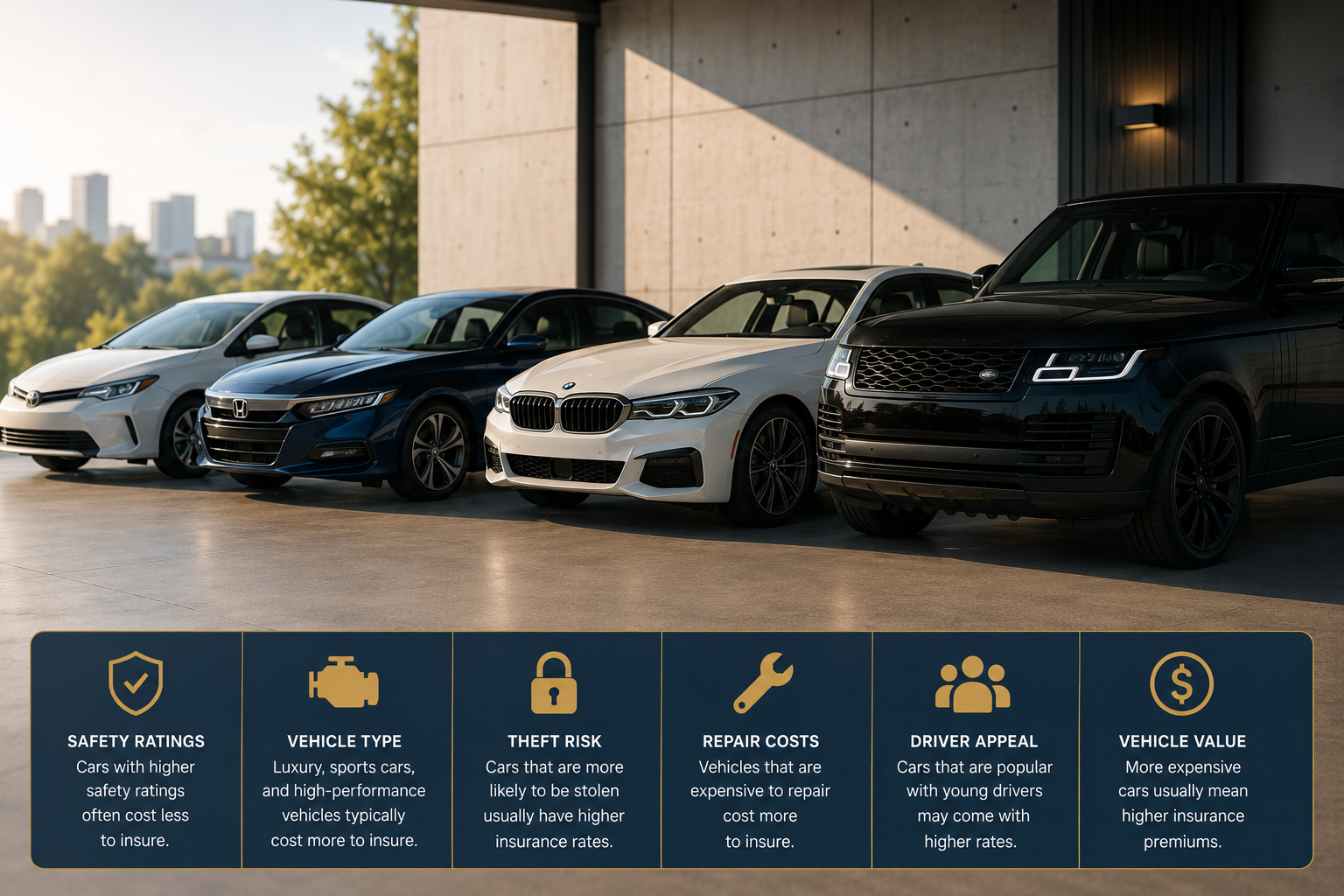
Yes. The type of car you drive can affect your auto insurance premium. Insurers may consider the vehicle’s make and model, repair or replacement cost, performance characteristics, theft exposure, how the vehicle is used, and other factors when rating a policy. The effect varies by insurer and state, and your vehicle is only one part of the price alongside your driving record, location, coverage choices, deductibles, mileage, and other permitted rating factors.
Key Takeaways
- Vehicle type is a recognized auto-insurance rating factor. NAIC guidance lists vehicle type among the main factors insurers may use when determining premiums.
- Repair and replacement costs matter. A vehicle that is expensive to repair or replace can create larger potential physical-damage claims.
- Luxury, sports, and high-performance vehicles may cost more to insure. Regulator guidance notes that these vehicles can have higher collision and comprehensive costs.
- Safety and anti-theft equipment may help in some cases. Some insurers offer discounts for qualifying devices, but availability varies by company and state.
- Get insurance quotes before buying a car. Two vehicles with similar purchase prices can have different insurance costs because insurers evaluate their risk characteristics differently.
Why the Car You Drive Can Change Your Insurance Rate
Auto insurers use underwriting and rating to evaluate risk and determine premiums. Underwriting helps the company evaluate whether it wants to insure a particular risk, while rating helps determine what premium to charge for the coverage.
The National Association of Insurance Commissioners lists vehicle type as one of the main rating factors for auto insurance. Vehicle use, miles driven, location, driving experience, driving record, claims history, selected coverages, and deductibles can also affect the premium.
Insurers ultimately price coverage based on the risk and expected cost of future claims. That means the characteristics of the vehicle matter because different cars can produce different claim frequencies, repair expenses, replacement costs, and other losses.
Your car does not determine the premium by itself. Two people driving the same model can pay different amounts because insurers also consider driver-related information, location, mileage, coverage limits, deductibles, claims history, and other rating factors allowed in the applicable state.
Vehicle Factors That May Affect Auto Insurance Rates
Make and Model
The specific make and model can affect insurance pricing. NAIC consumer guidance identifies the make and model of a vehicle as a factor that can influence rates and notes that luxury and sports cars tend to have higher claim experience.
Insurers may have different loss experience with different models, so two cars that seem similar to a buyer can receive different insurance classifications or premiums.
Repair Costs
The cost of repairing a damaged vehicle can influence insurance pricing, particularly for physical-damage coverage. Texas Department of Insurance guidance states that rates can be higher for cars that cost more to repair.
Repair costs can depend on the parts, labor, technology, materials, and procedures needed for the particular vehicle. Insurers can reflect their expected claim costs in their rates, subject to state insurance laws and regulatory requirements.
Vehicle Value and Replacement Cost
The cost to replace a vehicle after a covered total loss can also matter. NAIC guidance identifies the type of car and the cost to fix or replace it as factors that can affect auto premiums.
This factor is particularly relevant when a policy includes collision or comprehensive coverage, because those coverages address covered physical damage to the insured vehicle rather than only liability to other people.
Performance Characteristics
High-performance and sports cars may cost more to insure. Texas Department of Insurance guidance specifically identifies luxury, high-performance, and sports cars as vehicle types associated with higher collision and comprehensive rates.
That does not mean every sports car is always more expensive to insure than every family sedan or SUV. Actual rates depend on the insurer’s loss data, rating system, driver, location, coverages, and other variables.
Theft Exposure
Theft risk can affect comprehensive insurance losses because comprehensive coverage generally addresses covered theft of the vehicle. Insurers can consider their claims experience when establishing rates, subject to state law.
Some insurers may offer discounts for qualifying anti-theft equipment. Discount eligibility varies, so drivers should confirm whether a specific device produces a discount before assuming it will reduce the premium.
Safety Equipment
NAIC consumer guidance lists safety-device discounts among the discounts consumers can ask insurers about. A qualifying safety feature therefore may reduce the premium under some insurer programs.
However, a car with more safety technology is not automatically cheaper to insure. Insurance pricing reflects multiple factors, including the insurer’s expected cost of repairing or replacing the vehicle. Consumers should compare actual quotes rather than relying on one vehicle feature.
How the Vehicle Is Used
The vehicle itself is not the only car-related factor. Insurers can also consider vehicle use and miles driven. A car used for regular commuting or other extensive driving creates a different exposure from a vehicle driven infrequently.
Business use deserves particular attention. Personal auto insurance and commercial auto insurance are not interchangeable, and a personal policy may restrict or exclude certain business uses. Tell the insurer accurately how the vehicle is used.
How Different Vehicle Characteristics Can Affect Coverage
| Vehicle Characteristic | Why It May Matter | Coverage Most Directly Relevant |
|---|---|---|
| Expensive vehicle | Potential repair or replacement costs may be higher | Collision and comprehensive |
| Luxury or high-performance car | Regulator guidance identifies these vehicle types as potentially having higher physical-damage rates | Collision and comprehensive |
| Vehicle with higher theft exposure | Theft can generate comprehensive claims | Comprehensive |
| Vehicle with qualifying safety or anti-theft equipment | Some insurers may offer applicable discounts | Depends on insurer and discount program |
| Vehicle driven extensively | Higher mileage can increase exposure to driving-related losses | Potentially affects overall rating |
Does Vehicle Type Affect Liability Insurance Too?
Vehicle characteristics can be part of overall auto-insurance rating, but the connection is especially easy to see with collision and comprehensive coverage because those coverages can pay for covered damage to or loss of the insured vehicle.
Liability coverage works differently. Bodily injury liability generally responds to covered injuries you legally owe others after an accident, while property damage liability generally addresses covered damage you cause to someone else’s property. The insured vehicle’s own replacement value therefore does not determine a liability claim payment in the same way it can affect a collision or comprehensive loss.
Insurers nevertheless use rating systems that consider multiple characteristics, including vehicle type. The exact effect on each component of a premium depends on the insurer and applicable state rating rules.
Why Collision and Comprehensive Rates Can Vary by Car
Collision Coverage
Collision coverage generally pays for covered physical damage to your vehicle after a collision with another vehicle or object, subject to the deductible and policy terms.
If a particular vehicle is more costly to repair after a crash, the insurer’s expected collision losses can be higher. Texas regulator guidance specifically notes that luxury, high-performance, sports, and expensive-to-repair vehicles can have higher collision rates.
Comprehensive Coverage
Comprehensive coverage generally addresses covered non-collision losses such as theft, vandalism, fire, certain weather events, falling objects, and contact with an animal, depending on the policy.
A vehicle’s value, repair costs, and theft experience can therefore be relevant to comprehensive pricing. The amount you pay also depends on your deductible and the insurer’s rating methodology.
State law versus lender requirements: Collision and comprehensive coverage generally are not required merely to satisfy a state’s basic auto insurance law. However, a lender or lessor may require them while a vehicle is financed or leased.
Are Expensive Cars Always More Expensive to Insure?
Not necessarily in every situation. Higher repair and replacement costs can increase the potential cost of collision or comprehensive claims, so an expensive vehicle may carry a higher physical-damage premium. But insurance companies do not price cars solely according to their sticker price.
Insurers also consider their experience with the particular vehicle, along with the driver’s characteristics, location, mileage, deductible, liability limits, optional coverages, and other rating variables.
This is why the insurance cost of two similarly priced cars can differ. The only reliable way to know how a prospective vehicle will affect your premium is to request a quote using the exact vehicle and comparable coverage.
Can Safety and Anti-Theft Features Lower Insurance Costs?
Potentially. NAIC consumer guidance lists safety-device and anti-theft-device discounts among the discounts drivers can ask about. However, not every company offers the same discounts, and not every device qualifies.
A discount also does not necessarily make one vehicle cheaper to insure overall. A vehicle might qualify for a safety-related discount but still have relatively high repair or replacement costs. The final premium reflects the combined effect of the insurer’s rating factors rather than one feature.
Ask before you buy. If a vehicle feature is important to your purchasing decision because you expect an insurance discount, ask prospective insurers whether that exact feature qualifies and how it affects the quote.
Other Factors That Affect Your Auto Insurance Premium
Changing vehicles may change your rate, but the car is only one piece of the calculation. NAIC guidance identifies several other common rating factors, subject to state law.
- Location: Where you live or garage the vehicle can affect expected claim costs.
- Driving record: Tickets and crashes can affect underwriting and rating.
- Claims history: Prior claims may affect pricing depending on applicable rules.
- Age and driving experience: These can be rating factors where permitted.
- Vehicle use and mileage: More driving can increase exposure to loss.
- Coverage limits: Buying more protection can increase premium.
- Deductibles: Accepting a higher deductible can reduce the physical-damage premium, but increases what you may need to pay after a covered loss.
- Other permitted factors: Insurers may use additional factors depending on state law and their approved rating methodology.
How to Compare Insurance Before Buying a Car
1. Get Quotes for the Exact Vehicles
If you are deciding between several vehicles, request an insurance quote for each one. Use the exact vehicle information when possible rather than relying on a broad category such as sedan, SUV, or sports car.
2. Keep Coverage Limits the Same
Compare vehicles using the same liability limits, uninsured or underinsured motorist coverage where applicable, and other selected coverage. Otherwise, a lower quote may simply reflect less protection rather than a cheaper vehicle to insure.
3. Match Collision and Comprehensive Deductibles
Deductibles have a direct effect on what you pay after a covered physical-damage claim and can also affect the premium. Use identical deductibles when comparing prospective cars.
4. Ask About Vehicle-Specific Discounts
Ask whether safety devices, anti-theft systems, or other qualifying equipment affect the premium. Discount programs differ among insurers and states.
5. Compare More Than One Insurer
Insurers use different rating systems and can have different loss experience with the same vehicle. A car that is relatively expensive with one insurer may be priced differently by another company.
6. Include Insurance in the Ownership Budget
The purchase price or monthly loan payment is only part of a vehicle’s cost. An insurance quote obtained before purchase can help you understand whether one of the vehicles you are considering will materially change your ongoing expenses.
Common Mistakes When Comparing Cars and Insurance
Assuming Purchase Price Determines the Insurance Price
Vehicle value is relevant, but it is not the only vehicle-related factor. Repair costs, model-specific loss experience, theft exposure, use, and other characteristics can also affect pricing.
Buying the Car Before Checking the Premium
If insurance affordability matters to your budget, obtain quotes before signing the purchase or lease agreement. The difference between vehicles may be meaningful even when their purchase prices are similar.
Comparing Quotes With Different Deductibles
A quote with a larger collision or comprehensive deductible may look cheaper because you are agreeing to bear more of a covered loss yourself. Compare equivalent deductibles before deciding that one vehicle is cheaper to insure.
Assuming Every Safety Feature Creates a Discount
Discount eligibility depends on the insurer’s program and applicable state rules. Confirm the actual premium instead of estimating savings based on equipment alone.
Ignoring How You Will Use the Vehicle
A vehicle used for commuting, extensive annual mileage, or business activities may be rated differently from a vehicle used less frequently. Give the insurer accurate information about expected use.
When to Request a New Auto Insurance Quote
A change in vehicle is a useful time to review the entire policy rather than simply transferring existing coverage without comparison.
- Before purchasing or leasing a different car.
- When adding another vehicle to the household.
- When changing how a vehicle is used.
- When annual mileage changes substantially.
- When a financed vehicle is paid off and lender requirements change.
- At renewal, when comparing insurers may reveal different pricing for the same vehicle and coverage.
Frequently Asked Questions
The Bottom Line
The type of car you drive can affect insurance rates because insurers consider vehicle-related characteristics when estimating future claim costs. Make and model, repair and replacement expenses, performance, theft exposure, use, mileage, and qualifying safety or anti-theft equipment can all be relevant depending on the insurer and state.
The important limitation is that vehicle type is only one part of the premium. Your driving history, location, coverage limits, deductibles, claims history, and other permitted factors also matter. Before purchasing or leasing a car, compare insurance quotes for the exact vehicles using equivalent coverage so you can evaluate the full cost rather than the purchase price alone.
Sources
- National Association of Insurance Commissioners, Insurance Topics: Auto Insurance, last updated September 26, 2025.
- National Association of Insurance Commissioners, Consumer Auto Insurance, accessed August 2026.
- National Association of Insurance Commissioners, Why Are My Insurance Premiums Increasing?, November 19, 2024.
- Texas Department of Insurance, Shopping Smart: Tips for Buying Auto and Home Insurance, accessed August 2026.