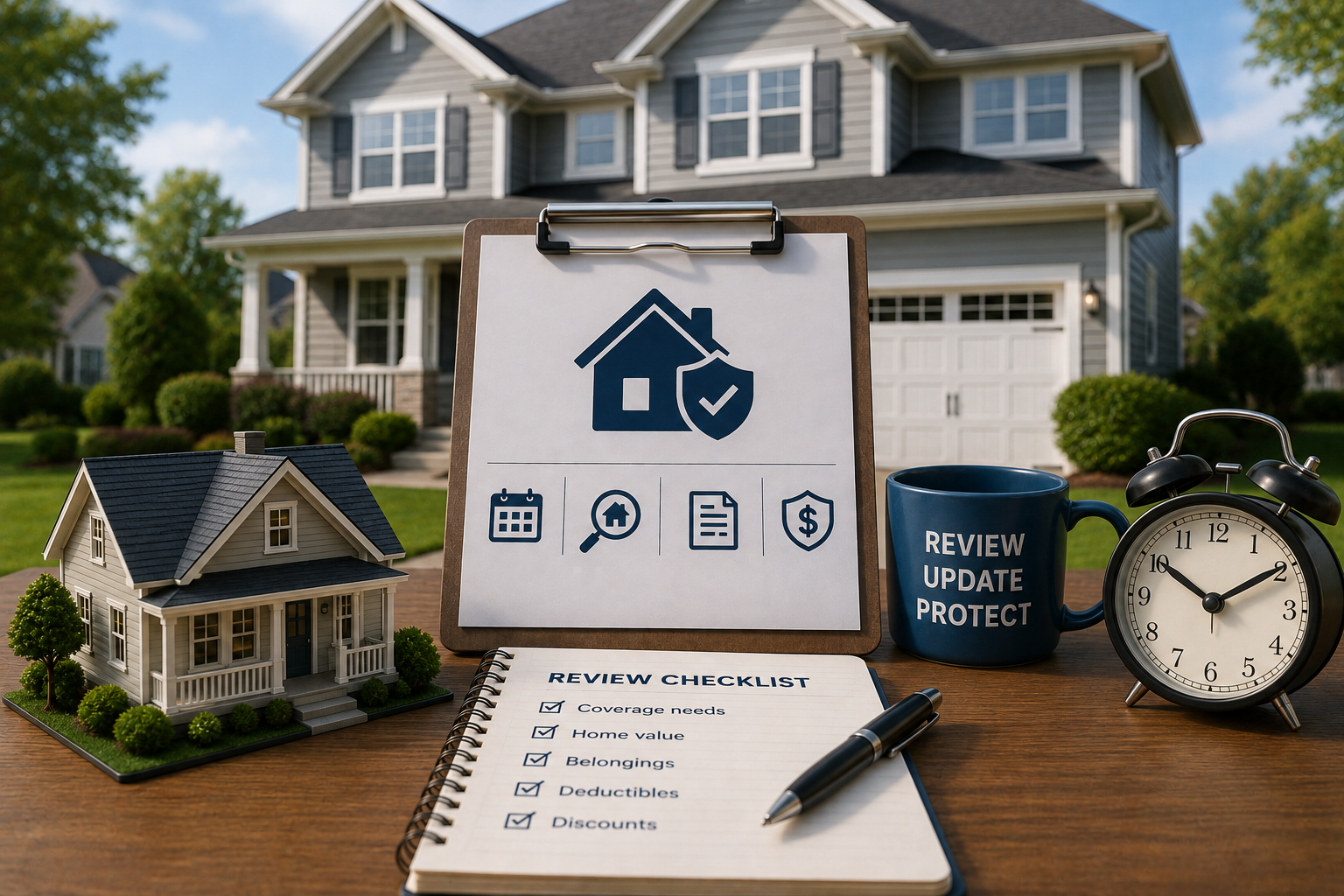
Homeowners should generally review their home insurance at least once a year, preferably before renewal, and again after major changes to the home, belongings, household, or risks. An annual review can help confirm that dwelling and personal-property limits still reflect current needs, deductibles remain affordable, important endorsements are in place, and changes such as remodeling or expensive purchases have not created coverage gaps.
Key Takeaways
- Review home insurance at least annually. NAIC guidance recommends checking with your insurer or agent at least once a year to make sure coverage remains adequate.
- Do not wait for renewal after a major change. Remodeling, additions, valuable purchases, a home business, or other meaningful changes can justify an earlier review.
- Rebuilding cost matters more than the home’s sale price. Dwelling insurance should reflect the cost to rebuild under applicable policy terms, not simply market value.
- Update your home inventory every year. New electronics, jewelry, furniture, collectibles, and other purchases can change personal-property needs.
- Review exclusions as well as limits. A higher dwelling limit does not add protection for losses the policy excludes, such as flooding under a typical homeowners policy.
How Often Should You Review Your Homeowners Insurance?
An annual review is a practical baseline. The National Association of Insurance Commissioners recommends checking with your insurance company or agent at least once each year to make sure your homeowners policy provides adequate coverage.
Renewal is a convenient time because your insurer normally sends updated policy documents, premiums, deductibles, limits, endorsements, and notices before the next policy period begins. Reviewing those documents can help you identify changes instead of automatically renewing the policy without examining it.
Annual review should not be treated as a maximum interval. If something significant changes during the year, contact the insurer rather than waiting months for renewal. A renovation, major purchase, new business activity, change in occupancy, or another material change may affect coverage or underwriting.
A useful rule: Review the policy every year and whenever your home, property, household, or exposure to loss changes significantly.
Why an Annual Home Insurance Review Matters
A homeowners policy purchased several years ago reflects the home, belongings, coverage options, and insurer requirements that existed at that time. Those details can change.
Construction costs may change. You may remodel a kitchen, finish a basement, add a room, install new equipment, or acquire valuable personal property. Your insurer may also change certain policy provisions at renewal, subject to applicable state requirements.
Texas Department of Insurance renewal guidance, for example, advises homeowners to check whether roof coverage has changed, whether information about the house remains accurate, and what the applicable deductibles are. Those are useful review questions even though policy forms and insurance rules vary by state.
Changes That Should Trigger an Insurance Review
1. You Remodel or Add to the Home
Renovations can increase the amount it would cost to rebuild a home after a covered total loss. NAIC guidance specifically identifies additions, remodeling, and other improvements as reasons to review coverage.
Examples can include an addition, finished basement, substantially renovated kitchen, upgraded bathroom, new attached structure, or other construction that changes the home’s size, materials, or rebuilding cost.
2. You Make Expensive Purchases
New furniture, electronics, jewelry, artwork, collectibles, musical instruments, and other purchases can change the value of your personal property.
Certain categories of property may also have special limits under a homeowners policy. Simply increasing the overall personal-property limit may not solve a sublimit affecting jewelry or another category. A scheduled personal-property endorsement or other specialized protection may be available depending on the insurer.
3. You Replace or Significantly Upgrade the Roof
Roof age and condition can affect underwriting, coverage, and premiums. If you replace the roof, tell the insurer and make sure its records are updated accurately.
At renewal, also check whether the policy’s roof settlement provisions have changed. Some policies may settle roof losses differently based on policy terms, roof age, endorsements, or other factors.
4. You Start Running a Business From Home
A standard homeowners policy may provide limited or inadequate protection for business property and business-related liability. NAIC guidance advises homeowners to disclose home-business activity and obtain appropriate coverage.
Tell the insurer if you begin storing inventory, receiving customers, operating specialized equipment, or otherwise conducting business from the residence.
5. You Add a Pool, Detached Structure, or Other Property Feature
A pool, detached garage, shed, deck, or other structure can change property and liability exposures. Coverage for other structures is commonly related to the dwelling limit, but exact limits and eligibility depend on the policy.
Notify the insurer before or soon after adding a significant feature so it can determine whether additional coverage, liability protection, or underwriting information is required.
6. Your Household or Occupancy Changes
How a property is occupied can affect insurance. Changes such as turning a primary residence into a rental, leaving a home vacant for an extended period, or changing how a secondary home is used can raise coverage questions.
Do not assume a standard owner-occupied homeowners policy remains appropriate after a substantial change in occupancy. Contact the insurer for guidance based on the specific policy.
What to Check During a Home Insurance Review
| Policy Item | What to Review | Why It Matters |
|---|---|---|
| Dwelling coverage | Current rebuilding estimate, renovations, square footage, construction details | The limit should reflect applicable rebuilding needs rather than simply the home’s sale price |
| Personal property | Home inventory, expensive purchases, special limits, valuation method | New belongings can make an old limit or sublimit inadequate |
| Liability coverage | Limits and changes in household or property liability exposures | Liability needs can change even when the home itself has not changed |
| Deductibles | Dollar or percentage deductibles and any separate peril deductibles | The amount you would pay after a covered loss may have changed |
| Roof coverage | Replacement cost, actual cash value, endorsements, exclusions, roof information | Settlement terms may materially affect a roof claim |
| Exclusions and endorsements | Flood, earthquake, water, valuables, business property, and other special risks | Higher limits do not overcome an exclusion |
Review Your Dwelling Coverage and Rebuilding Cost
One of the most important parts of an annual review is checking the dwelling limit. NAIC guidance states that dwelling coverage should be sufficient to address the cost to rebuild the insured home under the policy.
Rebuilding cost is not the same as real estate market value. Market value reflects factors such as the land and local housing market. Replacement cost focuses on what it would take to repair or rebuild damaged property using materials of like kind and quality, subject to the policy.
If you have remodeled, increased the home’s square footage, upgraded materials, or corrected inaccurate property information, ask the insurer whether the dwelling estimate should be updated.
Do not use your home’s sale price as a substitute for an insurance rebuilding estimate. The two values measure different things and can move differently over time.
Replacement Cost vs. Actual Cash Value
An annual review is also an opportunity to check how the policy values damaged property. Replacement cost and actual cash value can produce materially different claim payments.
NAIC guidance explains that replacement cost generally reflects the cost to repair or replace covered damaged property with property or materials of like kind and quality, subject to policy terms. Actual cash value accounts for depreciation associated with factors such as age and wear.
Do not assume every part of a homeowners policy uses the same valuation method. Roofs, personal property, and other insured property may have different settlement provisions depending on the form and endorsements.
Update Your Home Inventory Every Year
Your policy review should include your belongings, not just the structure. NAIC guidance recommends reviewing and updating a home inventory annually and updating it when new items are purchased.
A useful inventory may include:
- Photos or video of rooms and belongings.
- Descriptions of significant items.
- Purchase dates and prices when available.
- Model and serial numbers for applicable property.
- Receipts or appraisals for higher-value items.
- Information about jewelry, artwork, collectibles, electronics, tools, and other property that could be subject to special limits.
Keep a copy somewhere that would remain accessible if the home were damaged. An inventory can help evaluate whether limits remain appropriate and can also provide useful documentation after a loss.
Review Your Deductibles
A deductible is the portion of a covered property loss that the policyholder is responsible for before applicable insurance payment. Increasing a deductible may reduce a premium, while lowering it may increase premium, depending on the insurer and policy.
During your review, do not look only at the number printed as the deductible. Determine whether it is a fixed dollar amount or a percentage of an insured value. A percentage deductible can represent a larger dollar amount as the insured value of the home changes.
Depending on the policy and location, separate deductibles may also apply to specific causes of loss. Review the declarations and endorsements rather than assuming one deductible applies to every covered claim.
Review Important Exclusions and Coverage Gaps
Adequate limits do not help with a loss that falls outside the policy. That makes exclusions and optional coverage an essential part of an annual review.
Flood
Typical homeowners insurance does not cover flooding. FEMA also warns consumers that homeowners policies generally do not cover flood damage. Flood insurance is separate protection and may be available through the National Flood Insurance Program or private insurers, subject to eligibility and policy terms.
Earthquake
Typical homeowners coverage also should not be assumed to cover earthquake damage. Separate earthquake coverage or an endorsement may be available depending on the market and insurer.
Business Property and Liability
If the home is being used for business, personal homeowners coverage may not adequately protect business inventory, equipment, or liability. Discuss the activity with the insurer.
High-Value Belongings
Jewelry, art, collectibles, and other valuable property may be subject to special limits or restrictions. Review these limits whenever you acquire expensive property or its value changes materially.
Should You Shop Around Every Year?
Reviewing coverage every year does not necessarily mean you must switch insurers every year. It does mean renewal is a reasonable time to examine what you are paying and what protection you are receiving.
If you compare quotes, use equivalent coverage as closely as possible. A lower premium can result from a higher deductible, lower limits, different roof settlement provisions, narrower protection, or different endorsements.
Also ask about applicable discounts. NAIC guidance notes that insurers may offer discounts for features such as security devices or for placing multiple types of insurance with the same company, though availability varies.
Annual Home Insurance Review Checklist
- Confirm your name, address, square footage, construction information, roof age, and other property details are accurate.
- Review the dwelling limit and ask whether the estimated rebuilding cost remains appropriate.
- Update your home inventory and personal-property values.
- Identify jewelry, artwork, collectibles, or other property that may have special limits.
- Review replacement cost and actual cash value provisions.
- Check roof settlement terms and applicable endorsements.
- Calculate what each deductible would mean in dollars after a covered claim.
- Review personal liability limits and changes that may affect liability exposure.
- Check coverage for additions, detached structures, pools, or other property improvements.
- Tell the insurer about home-business activity or material occupancy changes.
- Review flood, earthquake, and other exclusions relevant to the property.
- Compare renewal premium, limits, deductibles, exclusions, endorsements, and available discounts before deciding whether to renew or shop elsewhere.
Common Home Insurance Review Mistakes
Automatically Renewing Without Reading the Documents
Renewal documents can contain changes in premium, deductibles, limits, coverage provisions, or endorsements. Review the documents instead of assuming the next policy period is identical to the previous one.
Using Market Value as the Dwelling Limit
The price for which a property might sell is different from the cost of rebuilding the insured structure. Review dwelling coverage in terms of applicable rebuilding costs and policy requirements.
Ignoring Personal-Property Sublimits
A high overall contents limit does not necessarily mean every valuable item receives that full amount of protection. Certain categories can have special limits.
Assuming a Policy Covers Every Natural Disaster
Homeowners insurance contains exclusions. Flooding and earthquake damage are important examples of risks that typical homeowners policies should not be assumed to cover.
Choosing a Deductible Based Only on Premium Savings
A higher deductible may reduce premium, but it also increases what you would be responsible for after a covered loss. Make sure the deductible remains financially manageable.
Frequently Asked Questions
The Bottom Line
Home insurance should generally be reviewed at least once every year, with renewal serving as a natural checkpoint. Homeowners should also review coverage sooner after substantial renovations, major purchases, occupancy changes, a new home business, roof replacement, or other developments that can affect property values or liability exposures.
The biggest risk is assuming that automatic renewal means the policy automatically remains appropriate. Review rebuilding estimates, personal-property values, deductibles, liability limits, roof settlement terms, exclusions, endorsements, and separate risks such as flood. Policy forms and state requirements vary, so use the actual renewal documents and insurer information when making coverage decisions.
Sources
- National Association of Insurance Commissioners, Consumer Homeowners Insurance, accessed August 2026.
- National Association of Insurance Commissioners, Your Annual Insurance Check-up, January 1, 2011.
- National Association of Insurance Commissioners, What’s the Difference Between Actual Cash Value Coverage and Replacement Cost Coverage?, January 2, 2025.
- Texas Department of Insurance, Is Your Home Policy Up for Renewal? Here’s What to Look For, accessed August 2026.
- Federal Emergency Management Agency, Myths and Facts About Flood Insurance, accessed August 2026.