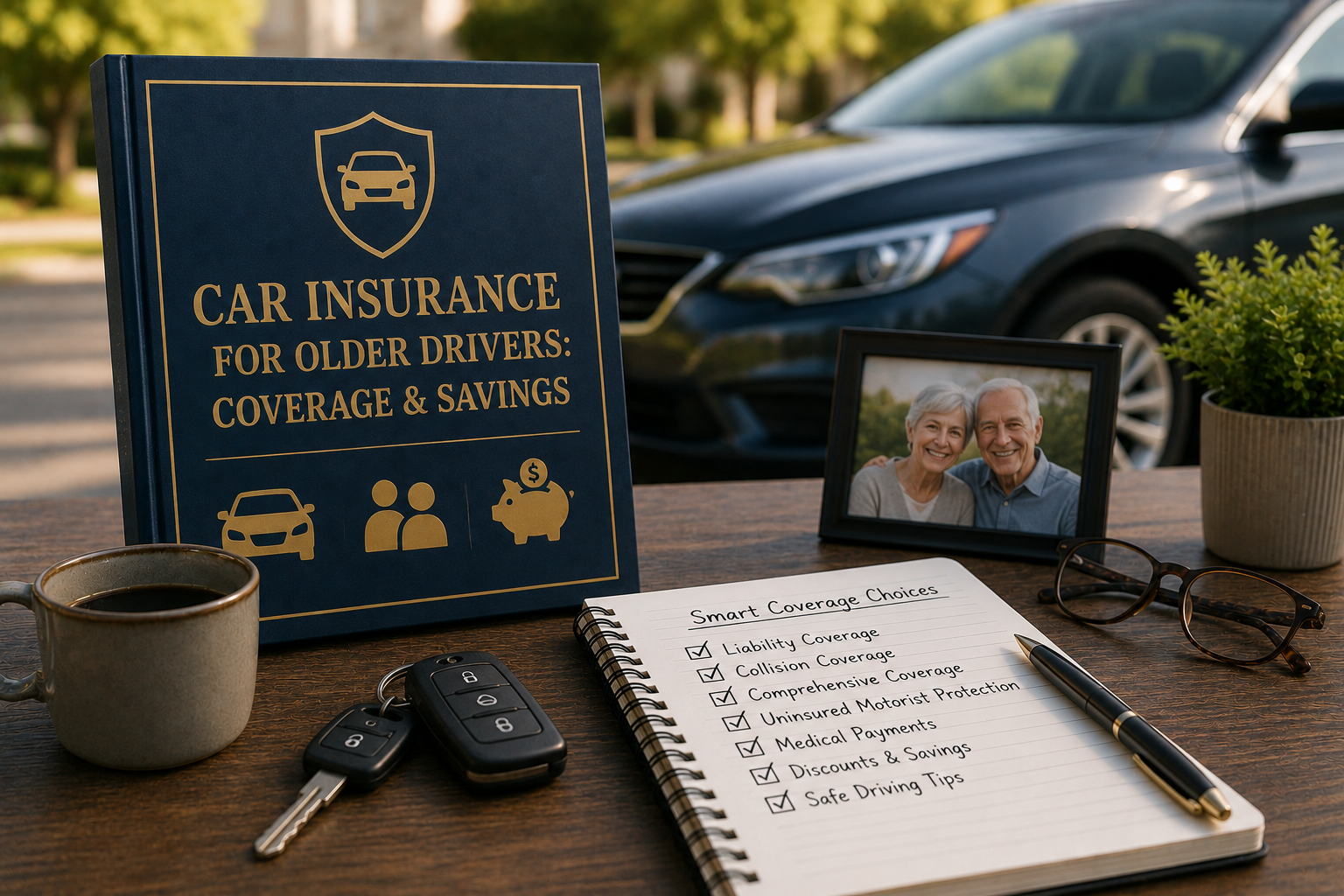
Older drivers should review car insurance based on their current driving habits, vehicle value, assets, state requirements, and ability to pay for losses—not age alone. Premiums may change as insurers consider permitted rating factors such as age, driving history, mileage, location, and vehicle characteristics. Mature-driver courses, low-mileage programs, and other discounts may help, while liability limits, deductibles, collision, comprehensive, and uninsured-motorist protection deserve periodic review.
Key Takeaways
- Age may affect auto insurance pricing where state law and approved rating rules permit it, but it is only one of several factors insurers may consider.
- Drivers who retire or substantially reduce annual mileage should tell their insurer because vehicle use and mileage can affect premiums or discount eligibility.
- Some insurers or states provide opportunities for mature-driver or approved driver-education discounts, but eligibility rules vary.
- An older vehicle may justify reconsidering collision and comprehensive coverage, but the decision should account for vehicle value, deductibles, savings, and any lender or lease requirements.
- Driving-license rules for older adults are separate from insurance rules and can differ substantially among states.
How Car Insurance Changes for Older Drivers
There is no single birthday on which car insurance automatically changes for every American driver. Insurers operate under state insurance laws and approved rating systems, and their underwriting and discount rules can differ.
The National Association of Insurance Commissioners identifies age as one factor that may be used in auto insurance pricing, along with factors such as driving record, geographic territory, vehicle use, and the make and model of the vehicle. State law determines which rating factors are permitted, restricted, or required in a particular jurisdiction.
That means an older driver’s premium should not be assumed to increase or decrease solely because of age. Changes in mileage, claims, traffic violations, household drivers, vehicles, coverage selections, deductibles, residence, and insurer pricing can also affect the renewal premium.
Insurance and driving fitness are different issues: NHTSA states that decisions about a person’s ability to drive should not be based on age alone. Vision, physical fitness, reflexes, medications, medical conditions, and actual driving performance can be more meaningful safety considerations. Licensing requirements for older drivers are determined by individual states.
What Can Affect an Older Driver’s Premium?
Age and State Rating Rules
Insurers may use age-related rating information where permitted under applicable state law and insurance regulations. The effect of age on a particular premium is not uniform nationwide, and insurers can use different approved rating methodologies.
Driving Record
Accidents, claims, moving violations, and other driving-record information can affect pricing and eligibility depending on the insurer and state. A long history of safe driving may work in a driver’s favor, while recent violations or at-fault accidents may increase costs or affect available discounts.
Annual Mileage and Vehicle Use
Vehicle use can affect insurance pricing. Someone who recently retired may no longer drive to work every weekday and may travel substantially fewer miles. If that happens, the policyholder should ask the insurer to update the vehicle’s use and estimated annual mileage.
Some companies offer low-mileage discounts or usage-based programs. Eligibility, savings, monitoring methods, and the effect of collected driving data vary by program, so drivers should understand the terms before enrolling.
Vehicle Type and Repair Costs
The vehicle itself matters. Insurers may consider factors related to claim frequency, repair costs, theft exposure, safety equipment, and other vehicle characteristics. Replacing an older car with a newer model can therefore change the premium even when the driver and coverage limits remain the same.
Location and Household Changes
Moving after retirement can change insurance costs because insurers may consider geographic territory where permitted. Household changes can matter too. If another person regularly drives the vehicle or moves into the household, the policyholder should accurately disclose the information requested by the insurer.
Coverages Older Drivers Should Review
Getting older does not create a separate type of auto insurance policy. Older drivers generally choose among the same major personal auto coverages as other drivers. What may change is how much protection makes sense for the driver’s current finances, vehicle, driving habits, and state requirements.
| Coverage | What It Generally Addresses | What to Review |
|---|---|---|
| Liability | Covered bodily injury or property damage you are legally responsible for after an accident | State minimums, personal assets, income, and available liability limits |
| Collision | Covered damage to your vehicle from a collision, subject to the deductible and policy terms | Vehicle value, deductible, premium, and lender or lease requirements |
| Comprehensive | Certain covered non-collision losses such as theft, vandalism, fire, or falling objects | Vehicle value, deductible, covered causes of loss, and financing requirements |
| Uninsured/Underinsured Motorist | Certain losses involving drivers who have no insurance or insufficient liability insurance | Availability, required offers or limits, and state-specific rules |
| PIP or Medical Payments | Certain accident-related medical expenses and, depending on the coverage, other specified benefits | State requirements, health coverage, limits, exclusions, and coordination rules |
Liability Limits
Every state has its own financial-responsibility framework, and minimum auto liability requirements differ. Buying only the legal minimum can leave a driver personally responsible for amounts above the policy limit after a serious covered accident.
Older drivers who have accumulated retirement savings, investments, a home, or other assets may want to review whether their liability limits remain appropriate. The goal is not to select a universal recommended limit, but to compare potential liability exposure with available protection and personal finances.
Collision Coverage
Collision generally helps pay for covered damage to the insured vehicle caused by a collision, subject to the deductible and policy terms. State law typically does not require a driver to buy collision coverage simply to operate a vehicle, although a lender or leasing company may require physical damage coverage while it has a financial interest in the car.
Someone driving an older paid-off vehicle may want to compare the premium and deductible with the amount the insurer might pay if the vehicle were totaled. Dropping collision should be a deliberate financial decision because the driver would then generally bear the risk of collision damage to that vehicle unless another responsible party pays.
Comprehensive Coverage
Comprehensive generally covers specified non-collision losses such as theft, vandalism, fire, falling objects, and certain weather-related damage, subject to policy terms and the deductible. The exact covered causes of loss can differ.
Even on an older car, comprehensive may still have value when the vehicle faces theft, hail, storm, animal-strike, or similar exposures. Review collision and comprehensive separately rather than assuming both must always be kept or removed together.
Uninsured and Underinsured Motorist Coverage
Uninsured and underinsured motorist coverage can protect against certain losses caused by drivers who have no insurance or insufficient liability limits. Requirements, available forms, rejection rules, and covered damages vary by state, so the policyholder should review the exact protection offered in the policy.
PIP and Medical Payments Coverage
Personal injury protection and medical payments coverage can help with certain accident-related medical expenses, depending on the policy and state. PIP can include additional benefits in some states, while medical payments coverage generally has a narrower purpose. Availability and requirements vary substantially.
Car Insurance Discounts for Older Drivers
Discounts can vary by insurer and state. An older driver should ask specifically what is available instead of assuming the company will automatically apply every eligible discount.
Mature-Driver or Driver-Education Discounts
Some insurers offer discounts associated with approved driver-education or mature-driver courses. State rules can also affect eligibility. The exact qualifying age, approved course, driving-record requirements, discount amount, and duration should be verified before paying for a class solely to obtain an insurance discount.
State example: California’s Department of Insurance says drivers age 55 or older who complete a DMV-approved mature-driver improvement course can generally obtain a premium reduction from most auto insurers for up to three years, subject to applicable requirements. This is a California rule and should not be treated as a nationwide standard.
Low-Mileage Discounts
Retirement can reduce commuting and annual mileage. The NAIC notes that vehicle use and annual mileage can affect insurance exposure, and some insurers offer low-mileage discounts. Ask how mileage is verified and whether the insurer offers a traditional mileage discount, usage-based insurance, or another program.
Multi-Policy and Multi-Vehicle Discounts
An insurer may provide discounts for insuring multiple vehicles or combining auto insurance with homeowners, renters, or another eligible policy. Compare the total cost and coverage rather than assuming a bundled quote is automatically less expensive.
Vehicle Safety and Anti-Theft Discounts
Safety equipment and anti-theft devices may qualify for discounts with some insurers, depending on the state, vehicle, and coverage. Ask for a complete list of discounts and confirm that the policy information about the vehicle is accurate.
Should You Raise Your Deductible?
A higher collision or comprehensive deductible can reduce the premium in some cases because the policyholder agrees to absorb a larger portion of a covered physical-damage loss. That does not necessarily make a higher deductible the better choice.
Before increasing a deductible, consider whether enough accessible savings would be available after an unexpected accident. A driver living primarily on fixed retirement income may reasonably prefer a smaller deductible even if the premium is higher.
Illustrative example: Suppose one quote has a hypothetical $500 collision deductible and another has a hypothetical $1,000 deductible. The second option shifts an additional $500 of a covered collision loss to the policyholder. These figures are illustrative only and are not recommended deductibles, national averages, or statements about how much any insurer will charge.
Should You Drop Collision or Comprehensive on an Older Car?
The question becomes more relevant as a vehicle loses value. The California Department of Insurance, for example, advises consumers to reconsider whether collision and comprehensive still make sense as a vehicle gets older. The appropriate answer depends on the individual vehicle and finances.
Factors to review include:
- The vehicle’s current value.
- The annual premium attributable to collision and comprehensive.
- The deductibles.
- How easily you could repair or replace the vehicle without an insurance payment.
- Whether the vehicle has a loan or lease requiring physical damage coverage.
- The specific risks covered by collision and comprehensive that you would be assuming yourself.
Dropping physical damage coverage does not eliminate liability insurance requirements. It primarily changes how damage to the insured vehicle itself is handled, subject to the exact coverages removed.
How Retirement Can Change Insurance Needs
Retirement is a good time for a full policy review because several insurance-relevant facts may change at once.
- Commuting may stop: Tell the insurer if a vehicle is no longer used for commuting.
- Mileage may fall: Ask whether lower annual mileage affects pricing or discount eligibility.
- You may move: A new primary residence can change the insurance territory and state requirements.
- A vehicle may be sold: Removing an unused car can alter multi-car discounts and the structure of the policy.
- Assets may change: Revisit liability limits and any umbrella policy as part of broader retirement risk management.
- Another household member may drive more: Make sure regular drivers are accurately disclosed according to insurer requirements.
Older-Driver Licensing Rules Are State-Specific
Auto insurance and driver licensing are related to driving but are legally separate systems. States can impose different driver’s-license renewal schedules, vision requirements, in-person renewal rules, testing requirements, or other procedures for certain drivers.
NHTSA specifically advises older drivers to check their state’s requirements because some states have age-related licensing provisions. Drivers should use their state DMV or equivalent licensing agency for the current rules rather than relying on requirements from another state.
Medical conditions and medications can also affect driving ability. NHTSA recommends considering changes in vision, physical fitness, reflexes, attention, and medication effects. An insurance policy does not determine whether someone is medically fit or legally licensed to drive.
How to Compare Car Insurance Quotes as an Older Driver
Comparing only the final premium can hide meaningful coverage differences. Ask each insurer to quote similar limits, deductibles, drivers, vehicles, mileage, and optional coverages so the comparison is as consistent as possible.
Check the Driver and Vehicle Information
Verify birth dates, addresses, vehicle models, vehicle use, annual mileage, household drivers, and other application information. Incorrect details can affect both the quote and future policy administration.
Compare the Same Liability Limits
A quote with lower liability limits may naturally cost less while providing less protection. Compare bodily injury and property damage limits carefully rather than treating all policies as equivalent.
Compare Deductibles and Physical Damage Coverage
Make sure collision and comprehensive deductibles match across quotes. One policy may appear less expensive simply because it requires you to pay substantially more after a covered loss.
Ask for Every Applicable Discount
Ask about mature-driver courses, low mileage, good-driver or renewal discounts, multi-policy discounts, multi-car discounts, safety equipment, anti-theft devices, and any other programs for which you may qualify. Not every insurer or state offers every discount.
Re-Shop Periodically
Insurance pricing can change even when a driver has not had an accident. Periodically obtaining comparable quotes can show whether another insurer offers a better combination of premium, limits, deductibles, service, and coverage for your circumstances.
Policy Review Checklist for Older Drivers
- Confirm that all drivers, vehicles, addresses, and vehicle-use information are accurate.
- Update estimated annual mileage if driving habits have changed.
- Review liability limits rather than automatically renewing the same limits each year.
- Check uninsured and underinsured motorist options and state-specific requirements.
- Review PIP or medical payments coverage where available or required.
- Compare the vehicle’s value with the cost and deductible of collision and comprehensive coverage.
- Confirm whether a lender or leasing company requires collision and comprehensive.
- Ask about mature-driver, driver-education, low-mileage, multi-policy, multi-car, and safety-device discounts.
- Understand how any usage-based insurance program collects and uses driving information before enrolling.
- Check your state’s current driver-license renewal and vision requirements separately from insurance rules.
- Get comparable quotes from multiple insurers instead of evaluating premium in isolation.
Frequently Asked Questions
The Bottom Line
Car insurance for older drivers uses the same basic coverages available to other motorists, but retirement, lower mileage, changes in vehicle value, accumulated assets, and available mature-driver programs can make a policy review especially useful. Age may affect pricing where permitted, but it is not the only factor that determines a premium.
The biggest risk is reducing coverage simply to lower the premium without considering what financial exposure is being retained. State minimum liability limits, dropping collision, increasing a deductible, or removing other optional coverage can shift more of a future loss to the driver.
Before renewing, verify mileage and vehicle use, review liability and physical damage coverage, ask about every available discount, compare multiple quotes on similar terms, and separately confirm current driver-license requirements with the appropriate state agency.
Sources
- National Association of Insurance Commissioners, Consumer Auto, accessed August 2026.
- National Association of Insurance Commissioners, Tips for Saving on your Auto Insurance, accessed August 2026.
- National Highway Traffic Safety Administration, Older Drivers, accessed August 2026.
- California Department of Insurance, Driving for Seniors text version, revised May 28, 2025.