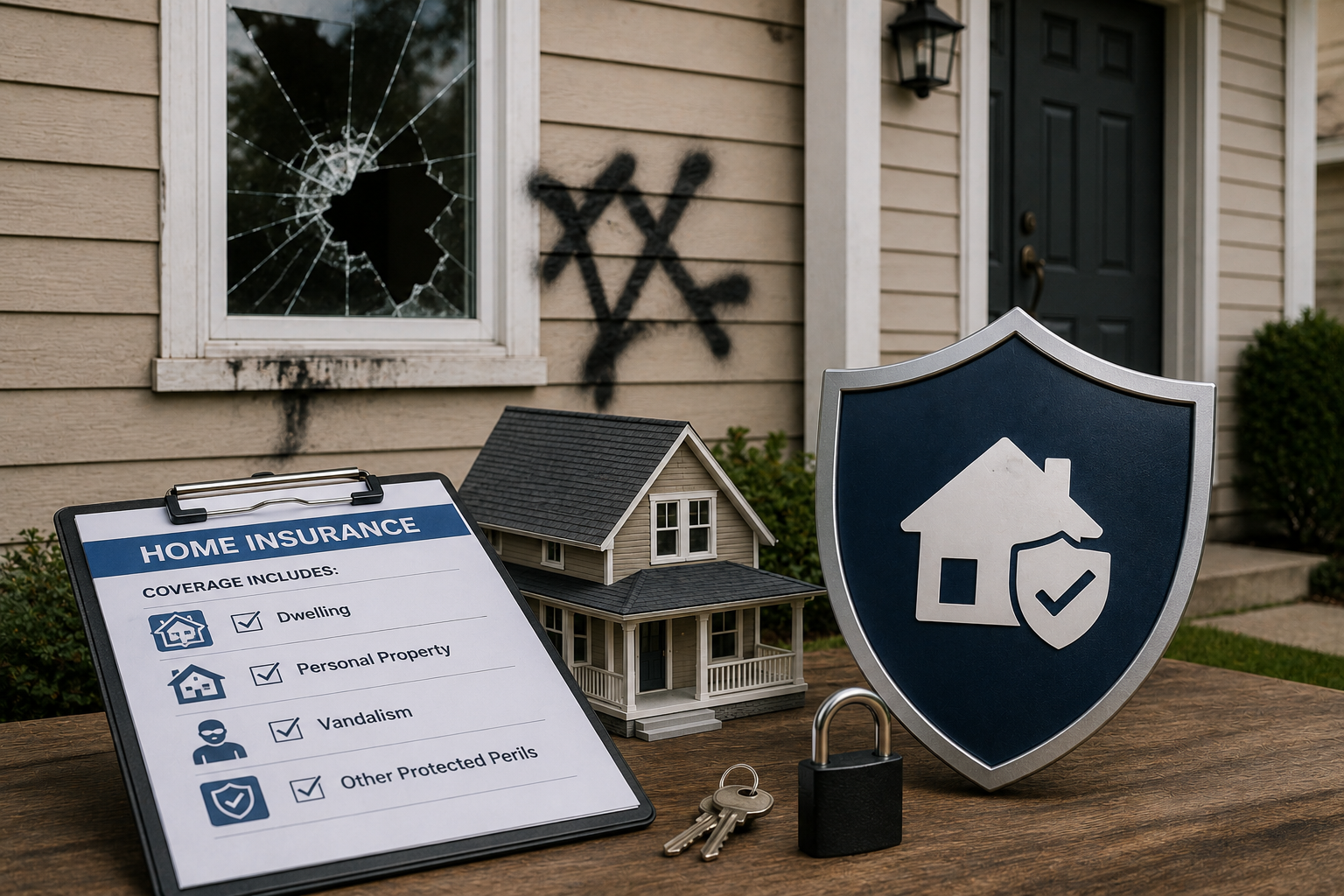
Homeowners insurance typically covers vandalism and malicious mischief when they are covered perils under the policy. That can include damage such as intentionally broken windows, damaged doors, graffiti, or destruction of insured property. Coverage is not automatic in every situation, however. Deductibles, exclusions, policy type, vacancy provisions, and the identity of the person who caused the damage can affect whether and how much the insurer pays.
Key Takeaways
- Vandalism and malicious mischief are commonly covered causes of loss under homeowners insurance.
- Coverage may apply to damage to the dwelling, other insured structures, and personal property, depending on the policy.
- A deductible generally applies before the insurer pays a covered vandalism claim.
- Vacancy can restrict or eliminate vandalism coverage after a period specified by the policy.
- Intentional damage caused by an insured person is generally treated differently from vandalism committed by an unrelated third party.
How Does Home Insurance Cover Vandalism?
Homeowners insurance pays for covered damage caused by perils included under the policy. The National Association of Insurance Commissioners identifies vandalism and malicious mischief among the perils commonly included in homeowners coverage.
Vandalism generally involves deliberate damage to property by someone who does not have a legitimate reason to damage it. Examples can include someone smashing windows, spray-painting a wall, damaging doors, destroying landscaping or exterior property, or intentionally damaging belongings during a break-in.
Exactly how coverage applies depends on the policy form. Some policies insure against specifically named perils, while broader forms may cover physical damage unless the cause is excluded. The policy’s definitions, exclusions, limits, deductible, and endorsements ultimately control the claim.
What Types of Vandalism May Be Covered?
A covered vandalism claim can involve more than graffiti. Intentional physical damage may affect several parts of the insured property.
| Example | May Home Insurance Cover It? | Important Consideration |
|---|---|---|
| Windows intentionally smashed | Generally, if vandalism is covered. | Deductible and vacancy provisions may apply. |
| Graffiti painted on the house | Generally may be covered. | Repair or cleaning costs must exceed the practical effect of the deductible for a payment to result. |
| Door damaged during intentional destruction | May be covered. | Cause and circumstances of damage matter. |
| Furniture intentionally destroyed by an intruder | May be covered under personal property coverage. | Personal property valuation and limits apply. |
| Vehicle vandalized in the driveway | Generally not under homeowners insurance. | Comprehensive auto insurance commonly handles vehicle vandalism. |
| Damage intentionally caused by an insured | Coverage may be excluded. | Intentional-loss exclusions and state law must be reviewed. |
Does Vandalism Coverage Protect the House Itself?
Yes, when vandalism is a covered cause of loss, dwelling coverage may pay for qualifying physical damage to the insured house. This can include damage to walls, doors, windows, built-in fixtures, and other parts of the structure.
Other structures coverage may also apply to qualifying vandalism involving insured detached structures such as a garage, shed, or fence. Whether a particular structure is insured and the amount available depend on the policy.
The insurer generally pays only for covered physical damage and related repairs subject to the applicable limit and deductible. The policy does not provide unlimited reimbursement simply because the loss resulted from vandalism.
Does Home Insurance Cover Vandalized Personal Property?
Personal property coverage may pay when an intruder or vandal intentionally damages covered belongings and vandalism is an insured peril for the property involved.
For example, if someone breaks into a home and intentionally destroys furniture, electronics, or household items, the resulting covered damage may fall under personal property coverage.
Claim payments can depend on whether the belongings are insured at replacement cost or actual cash value. Special limits can also apply to particular categories of property, and business property may have more limited protection.
Vandalism vs. Theft: How Are They Different?
Theft and vandalism can happen during the same incident, but they describe different losses. Theft involves property being taken, while vandalism involves intentional damage or destruction.
Suppose someone breaks a back door to enter a house, spray-paints a wall, damages furniture, and steals a television. One incident could involve both covered vandalism damage and covered theft of personal property, subject to the policy.
| Loss | Typical Example | Coverage Section That May Be Relevant |
|---|---|---|
| Vandalism | Someone deliberately breaks windows or damages walls. | Dwelling, other structures, or personal property coverage. |
| Theft | Someone steals electronics, furniture, or other covered belongings. | Personal property coverage. |
Vacant Homes Can Have Different Vandalism Coverage
Vacancy is one of the most important limitations to check when evaluating vandalism coverage. Standard homeowners policies may restrict or stop coverage for certain losses after a home has been vacant for the period specified in the policy.
Texas Department of Insurance consumer guidance specifically lists losses occurring after a house has been vacant for the number of days specified by the policy among losses that may not be covered. Other states, insurers, and policy forms can use different vacancy provisions.
Vacant and unoccupied can also have particular meanings within an insurance contract. A house temporarily empty while the owner travels may not necessarily be treated the same as a house that has been emptied of normal furnishings and is no longer being lived in.
Planning to leave a home vacant? Contact the insurer before an extended vacancy. You may need a vacancy endorsement, vacant-home policy, or another coverage arrangement to maintain appropriate protection.
Does Insurance Cover Vandalism Caused by Someone Who Lives in the Home?
Intentional-loss provisions make this situation more complicated. Homeowners insurance generally is not designed to reimburse an insured person for damage that person intentionally causes to insured property.
Whether another resident qualifies as an insured can depend on the policy’s definitions and household relationships. State law can also affect how intentional-act exclusions apply when one insured intentionally causes damage but another insured did not participate.
Because these claims are highly fact-specific, do not assume ordinary third-party vandalism rules apply when the person responsible is a policyholder, spouse, household member, tenant, or other resident.
Does Home Insurance Cover Graffiti?
Graffiti caused by an unrelated vandal can generally fall within vandalism or malicious mischief coverage when that peril is insured by the policy.
Coverage could include reasonable costs to clean, repaint, or repair qualifying damaged surfaces. The deductible still applies, so a relatively small graffiti-removal bill may not result in an insurer payment if the cost is below or only slightly above the deductible.
Damage to fences, detached garages, sheds, or other structures may fall under a different coverage section and limit than damage to the main dwelling.
How Does the Deductible Affect a Vandalism Claim?
The homeowners deductible is generally the portion of a covered property loss that you pay before the insurer’s claim payment.
Consider a hypothetical vandalism loss that causes $7,000 in covered damage to windows, doors, and interior walls. If the applicable deductible is $1,000 and all $7,000 qualifies under the policy, the insurer could generally pay $6,000. These numbers are illustrative only and are not national averages.
If vandalism causes only $700 of qualifying damage and the applicable deductible is $1,000, the loss would generally fall below the deductible and would not produce a claim payment.
What About a Car Vandalized at Your Home?
Homeowners insurance generally does not cover physical damage to a motor vehicle simply because the vehicle was parked at your home when the vandalism occurred.
Comprehensive auto insurance is the coverage commonly used for covered vehicle vandalism. Examples can include someone intentionally scratching the vehicle, breaking windows, spray-painting the body, or causing other malicious damage.
Personal belongings damaged or stolen from inside the vehicle can involve a different analysis. Depending on the loss and policy, homeowners or renters personal property coverage may be relevant to belongings, while comprehensive auto coverage addresses covered physical damage to the vehicle itself.
What Should You Do After Your Home Is Vandalized?
Protecting people and documenting the damage should come before permanent repairs. Claim procedures vary by insurer and state, but several steps are generally useful.
- Make sure the property is safe. Avoid entering areas where broken glass, structural damage, exposed wiring, or another hazard creates a risk.
- Contact law enforcement when appropriate. A police report can help document that the damage resulted from vandalism.
- Photograph and record the damage. Take clear photos and videos before permanent repairs whenever it is safe to do so.
- Notify the insurer promptly. Ask about claim procedures, documentation, and emergency repair requirements.
- Prevent additional damage. Reasonable temporary measures, such as covering a broken window, may be necessary, but keep records and receipts.
- Keep damaged property when practical. Do not discard important evidence until the insurer has had an appropriate opportunity to inspect it or tells you otherwise.
NAIC consumer guidance recommends promptly notifying the insurance company after a covered home loss and documenting property damage with photos and videos.
How to Review Your Vandalism Coverage
Vandalism coverage is easy to overlook because homeowners rarely purchase it as a stand-alone coverage. It is normally part of the broader property protections in the policy.
- Check the perils insured against. Confirm how vandalism and malicious mischief are treated under your policy form.
- Review the dwelling limit. Make sure the home is insured appropriately for covered rebuilding or repair costs.
- Check other structures coverage. Detached garages, fences, sheds, and similar structures can have separate limits.
- Review personal property valuation. Determine whether covered belongings are insured at replacement cost or actual cash value.
- Check your deductible. Know how much damage would need to occur before the policy could produce a meaningful payment.
- Read vacancy provisions. This is particularly important for a second home, home under renovation, inherited property, or house awaiting sale.
- Review exclusions and endorsements. They can modify the protection provided by the base policy.
Frequently Asked Questions
The Bottom Line
Homeowners insurance commonly covers vandalism and malicious mischief, including qualifying intentional damage to the dwelling, other insured structures, and personal belongings. The deductible, policy limits, valuation provisions, exclusions, and circumstances of the damage determine how a specific claim is handled.
Vacancy deserves particular attention because coverage can change after a property has been vacant for the period specified in the policy. Review your policy before leaving a home vacant for an extended period, document vandalism promptly, take reasonable steps to prevent additional damage, and rely on the actual policy language when determining whether a loss is covered.
Sources
- National Association of Insurance Commissioners, Homeowners Insurance, updated October 25, 2025.
- National Association of Insurance Commissioners, What You Need to Know When Filing a Homeowners Claim, April 20, 2022.
- Texas Department of Insurance, Home Insurance Guide, accessed August 2026.
- California Department of Insurance, Residential Insurance: Homeowners and Renters, accessed August 2026.