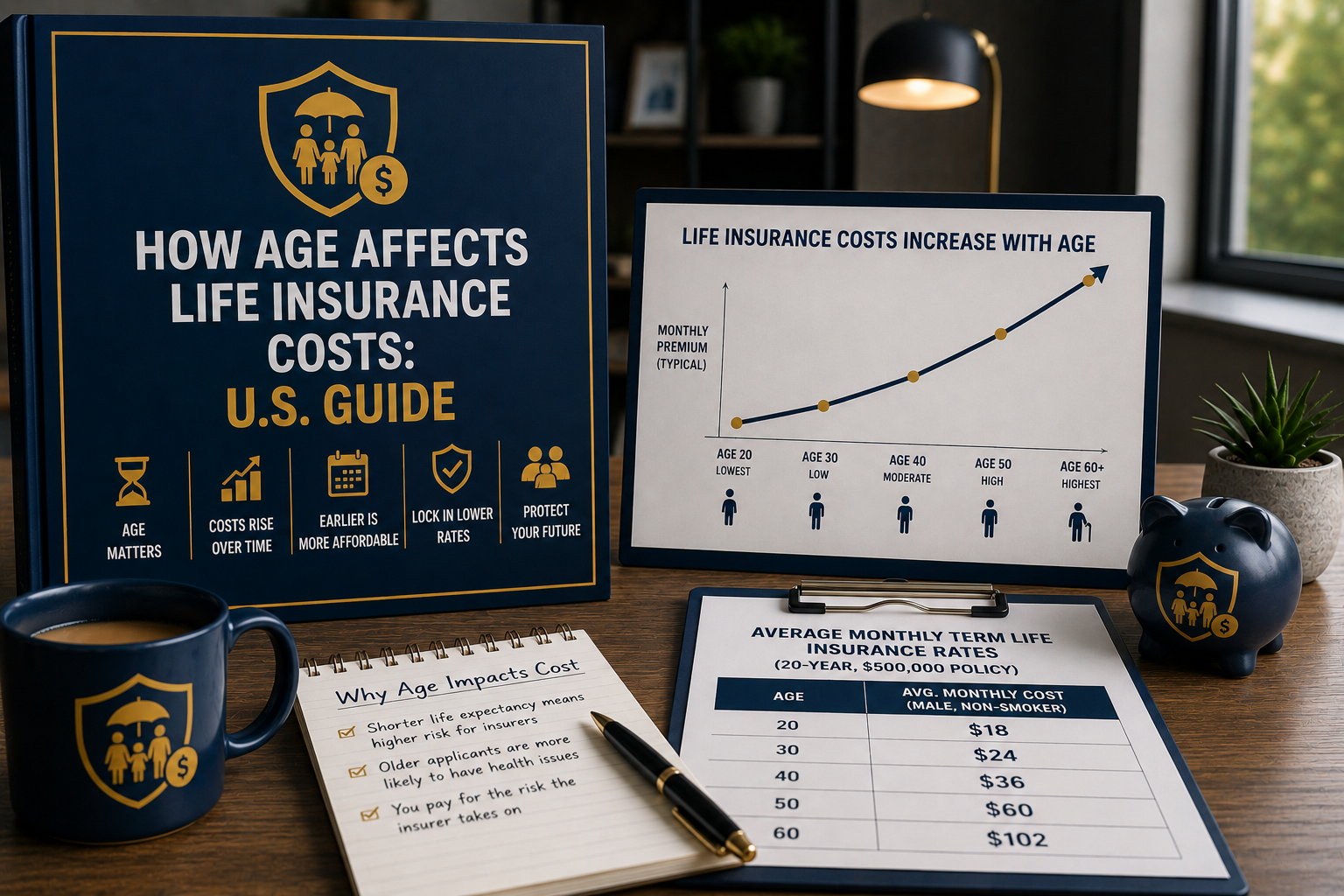
Age is one of the factors insurers commonly use when pricing individual life insurance. All else being equal, applying at an older age generally means a higher premium for new coverage because age affects the insurer’s assessment of risk. However, the exact cost also depends on health, tobacco use, coverage amount, policy type, underwriting classification, insurer, and other factors permitted under applicable law.
Key Takeaways
- Age commonly affects the price of new life insurance. Older applicants generally face higher premiums than otherwise similar younger applicants.
- Age is only one underwriting factor. Health, smoking or tobacco use, medical history, occupation, hobbies, policy amount, and other factors can also affect eligibility and price.
- Policy type matters. A level-premium whole life policy behaves differently from renewable term insurance, whose premium may increase when coverage is renewed.
- Buying earlier does not automatically mean buying the right policy. Coverage should match an actual financial need, appropriate duration, and affordable premium.
- Replacing coverage later can be costly. A new application may be priced using your older age and current health, so existing coverage should not be canceled before replacement coverage is fully evaluated and in force.
Why Does Age Affect Life Insurance Premiums?
Life insurers use underwriting to evaluate an applicant’s risk and determine whether to offer coverage and at what price. The National Association of Insurance Commissioners identifies age as a factor that can affect the cost of life insurance, while state regulator guidance also lists age among common underwriting considerations.
From an insurer’s perspective, a life insurance policy represents a promise to pay a death benefit if the insured dies while applicable coverage is in force. Age helps the insurer assess the risk associated with making that promise. As an applicant gets older, the cost of purchasing new coverage will generally rise, assuming other relevant factors remain similar.
That does not mean every person of the same age pays the same premium. Life insurance pricing is individualized. Two applicants of the same age seeking the same death benefit can receive different offers because their health, tobacco use, medical history, occupation, hobbies, policy choices, and underwriting classifications may differ.
Age affects the starting point, not the entire outcome. A younger applicant may have an age-related pricing advantage, but unfavorable health or tobacco-related underwriting can still materially affect the final offer. An older applicant with favorable underwriting may also receive a different rate class from another applicant of the same age.
How Life Insurance Underwriting Uses Age
Underwriting is the process an insurer uses to evaluate an application, classify risk, determine eligibility, and set an appropriate premium. The exact process varies by company, product, applicant, and state requirements.
In addition to age, information considered during life insurance underwriting may include:
- Current health and medical history.
- Tobacco or smoking history.
- Family health history where relevant to the insurer’s underwriting process.
- Occupation and potentially hazardous work.
- Potentially hazardous hobbies or activities.
- The type and amount of coverage requested.
- Other information permitted and used under the insurer’s underwriting process and applicable law.
Traditional underwriting can involve detailed health questions, medical records, laboratory testing, or a medical examination. Some insurers also offer simplified or accelerated underwriting processes. The NAIC notes that accelerated underwriting can use external information and analytics and may eliminate a traditional physical exam for qualifying applicants.
How Age Affects Term Life Insurance
Term life insurance provides coverage for a specified period or term. It generally does not build cash value. Because it is designed to provide a death benefit for a defined period rather than permanent lifetime protection, term coverage commonly has lower initial premiums than permanent insurance offering a comparable death benefit, although actual pricing depends on the applicant and policy.
Age has two particularly important effects on term insurance: the price when the coverage is purchased and the potential price of coverage after the original level-premium period ends.
Age When You Apply
Applying for a new term policy at an older age will generally result in a higher premium than applying for otherwise comparable coverage at a younger age, assuming similar underwriting circumstances.
Age can also affect which term lengths or products are available. Insurers set their own product eligibility and issue-age limits subject to applicable laws and approved policy forms. A particular long-term option available to a younger applicant may not necessarily be available at every older age.
Age When the Original Term Ends
Many term policies allow renewal for some period according to their contract terms. State insurance regulator guidance warns that premiums may increase when a policy is renewed for a new term. A policy may also limit how long renewal remains available.
This distinction is important. A person with a level-premium term policy may have the same scheduled premium during the guaranteed level period, but that does not necessarily mean the same premium will continue indefinitely after that period expires.
Check the renewal schedule before buying term insurance. Do not evaluate a term policy only by its initial premium. Review how long the premium is guaranteed, whether renewal is available after the original term, how renewal premiums are determined, and when any renewal right ends.
How Age Affects Permanent Life Insurance
Permanent life insurance is designed differently from term coverage and may include a cash value component. Whole life and universal life are examples, but their premium structures and guarantees are not identical.
Whole Life Insurance
The NAIC describes ordinary level-premium whole life insurance as coverage in which premiums stay the same throughout the insured’s life or until the policy’s cash value equals its face value, according to the policy design. This means getting older after purchasing such a policy does not automatically cause the scheduled level premium to rise simply because another birthday occurs.
Age still matters when a new whole life policy is issued. An older applicant generally begins from a more expensive age-related pricing position than a comparable younger applicant purchasing the same type and amount of new coverage.
Universal Life Insurance
Universal life insurance is more flexible and can have changing premiums, death benefits, policy values, or insurance costs depending on the contract and policyholder decisions. The NAIC notes that a universal life policy remains in force only while sufficient value is available to cover the applicable insurance costs, subject to the policy and any guarantees.
Because universal life policies can be complex, consumers should not assume that an illustrated premium is guaranteed to support the policy indefinitely. Review guaranteed values, non-guaranteed assumptions, funding requirements, and what could cause additional premiums to become necessary.
Term vs. Permanent Life Insurance as You Age
| Policy Feature | Term Life | Permanent Life |
|---|---|---|
| Age when buying | Older age generally increases the price of new coverage | Older age generally increases the price of newly issued coverage |
| Coverage duration | Designed for a specified term or coverage period | Designed for long-term or lifetime protection, subject to policy requirements |
| Premium behavior | May be level for a specified period; renewal premiums can increase depending on the contract | Depends on policy type; ordinary whole life and universal life do not have identical premium structures |
| Cash value | Generally none | Typically includes a cash value feature |
| Main age-related concern later | Renewing or replacing coverage at an older age can be more expensive | Policy performance and premium obligations depend on the permanent policy’s guarantees and design |
Does Your Premium Automatically Increase Every Birthday?
Not necessarily. The answer depends on the policy you own.
If you purchase a life insurance policy with a guaranteed level premium for a specified period, merely getting older during that period does not normally cause the guaranteed scheduled premium to change. Ordinary level-premium whole life also generally uses a level premium structure.
The situation can differ when a renewable term policy reaches the end of its original term, when a policy does not guarantee the premium for the entire period you expect to keep it, or when a flexible-premium permanent policy requires additional funding under its terms.
The most reliable answer is in the policy’s premium schedule, guarantees, renewal provisions, and illustration where applicable.
Age vs. Health: Which Matters More?
There is no universal rule saying age always matters more than health or vice versa. Insurers evaluate multiple factors together. Age may establish part of the underlying pricing framework, while health and other underwriting information can influence whether the applicant qualifies and the risk classification offered.
For example, a younger applicant should not assume that age alone guarantees the insurer’s best rate. Medical conditions, tobacco use, hazardous activities, or other underwriting factors can result in a different offer. Likewise, an older applicant’s price is not determined by age alone.
Quote comparisons should use the actual underwriting offer. An advertised starting price or preliminary quote may not equal the final premium after the insurer has completed the underwriting process.
Other Factors That Can Affect Life Insurance Cost
Age is important, but it should not be viewed in isolation. The final premium can also depend on the amount and design of the policy and the insurer’s assessment of the applicant.
Health and Medical History
Current health, past medical conditions, treatment history, prescriptions, and other health information may be relevant to underwriting. The exact information requested varies by insurer and product.
Tobacco Use
Smoking and other tobacco-related information can affect life insurance underwriting and premiums. Applicants should answer application questions accurately rather than assuming a particular type or frequency of use is irrelevant.
Coverage Amount
More coverage generally costs more than less coverage, all else being equal. The appropriate death benefit should be based on the financial obligations the policy is intended to address rather than an arbitrary multiple or a desire to obtain the largest available amount.
Policy Length and Type
The duration and design of coverage affect price. Term, whole life, universal life, and other policy forms have different guarantees, cash value features, premium structures, and costs.
Occupation and Activities
Certain hazardous occupations or recreational activities can affect underwriting. New York’s insurance regulator, for example, identifies hazardous occupations and dangerous hobbies among factors insurers may consider when evaluating an application.
Is It Better to Buy Life Insurance When You Are Younger?
From a pricing perspective, younger applicants generally have an advantage when purchasing new individual life insurance. Texas Department of Insurance consumer guidance states that life insurance costs are usually lower for younger people, while California guidance notes that term insurance becomes more expensive as a person gets older.
That does not mean everyone should buy a policy as early as possible regardless of need. Buying coverage earlier can mean paying premiums for more years. The decision should begin with whether someone actually needs life insurance, how much protection is appropriate, how long that need is expected to last, and what premium is sustainable.
Common reasons for considering coverage can include replacing income for dependents, providing funds for debts or other obligations, supporting children or other family members, or addressing other financial needs that would exist after the insured’s death.
Why Replacing a Policy at an Older Age Requires Care
Replacing an existing life insurance policy with a new policy can create additional age-related costs. The new insurer generally evaluates the applicant at the applicant’s current age and under current underwriting circumstances rather than using the age and health information from when the older policy was purchased.
California Department of Insurance guidance specifically warns that a person may pay a higher premium for new coverage because the person is older than when the original life insurance was purchased. Changes in health can create additional concerns about price or eligibility.
Replacing permanent coverage can raise other issues involving accumulated cash values, surrender charges, new contestability or suicide provisions as permitted under applicable law and policy terms, and other contractual differences. Consumers should compare both policies carefully.
Do not cancel existing life insurance simply because you applied for a replacement. Evaluate the new policy, premium, guarantees, underwriting outcome, and effective coverage before giving up existing protection.
How to Compare Life Insurance as You Get Older
1. Define the Financial Need First
Decide what the death benefit is intended to accomplish and how long that need is expected to continue. This helps determine whether temporary or permanent protection may be appropriate.
2. Compare the Same Coverage Amount and Policy Type
A quote for a smaller death benefit or shorter term may naturally cost less. Use comparable specifications when evaluating insurers.
3. Look Beyond the Initial Premium
For term insurance, check how long the quoted rate is guaranteed and what happens after the level period. For permanent insurance, distinguish guaranteed values and premiums from non-guaranteed illustrations or assumptions.
4. Compare Underwriting Results
Different insurers can evaluate the same applicant differently within their underwriting programs. A final approved premium is more useful for comparison than an initial estimate that has not completed underwriting.
5. Check Insurer and Agent Licensing
Your state insurance department can help you verify whether an insurer or producer is properly licensed and provide consumer information relevant to life insurance in your state.
A Hypothetical Age Comparison
Consider two hypothetical applicants seeking comparable new term life insurance. Applicant A is age 30 and Applicant B is age 50. Assume, only for illustration, that their other underwriting characteristics are broadly similar.
Applicant B would generally be expected to face a higher age-related cost for the new coverage. This example is illustrative only and does not predict either applicant’s actual premium. Real offers depend on the insurer, health information, tobacco use, coverage amount, term length, underwriting classification, and other applicable factors.
The comparison also does not mean Applicant A should automatically buy coverage. The younger applicant should still have a legitimate insurance need and select an amount and duration that fit that need.
Frequently Asked Questions
The Bottom Line
Age is a significant factor in the cost of newly purchased life insurance. In general, an older applicant will pay more than an otherwise comparable younger applicant for similar new coverage. But age does not determine the final premium by itself; health, tobacco use, coverage amount, policy type, underwriting classification, and other factors can materially change the outcome.
The most important distinction is between the price of buying new insurance at an older age and what happens to a policy already in force. Level-premium policies may remain level according to their guarantees, while renewable term and flexible permanent coverage can behave differently. Before buying, renewing, or replacing coverage, review the premium guarantees, duration, death benefit, underwriting offer, policy values, exclusions, and long-term affordability.
Sources
- National Association of Insurance Commissioners, How Does Insurance Work?, accessed August 2026.
- National Association of Insurance Commissioners, Insurance Topics: Accelerated Underwriting, last updated April 7, 2026.
- National Association of Insurance Commissioners, Insurance Topics: Life Insurance, accessed August 2026.
- New York State Department of Financial Services, Consumer Life Insurance FAQ, accessed August 2026.
- California Department of Insurance, Life Insurance Guide, accessed August 2026.
- Texas Department of Insurance, Life insurance guide, accessed August 2026.