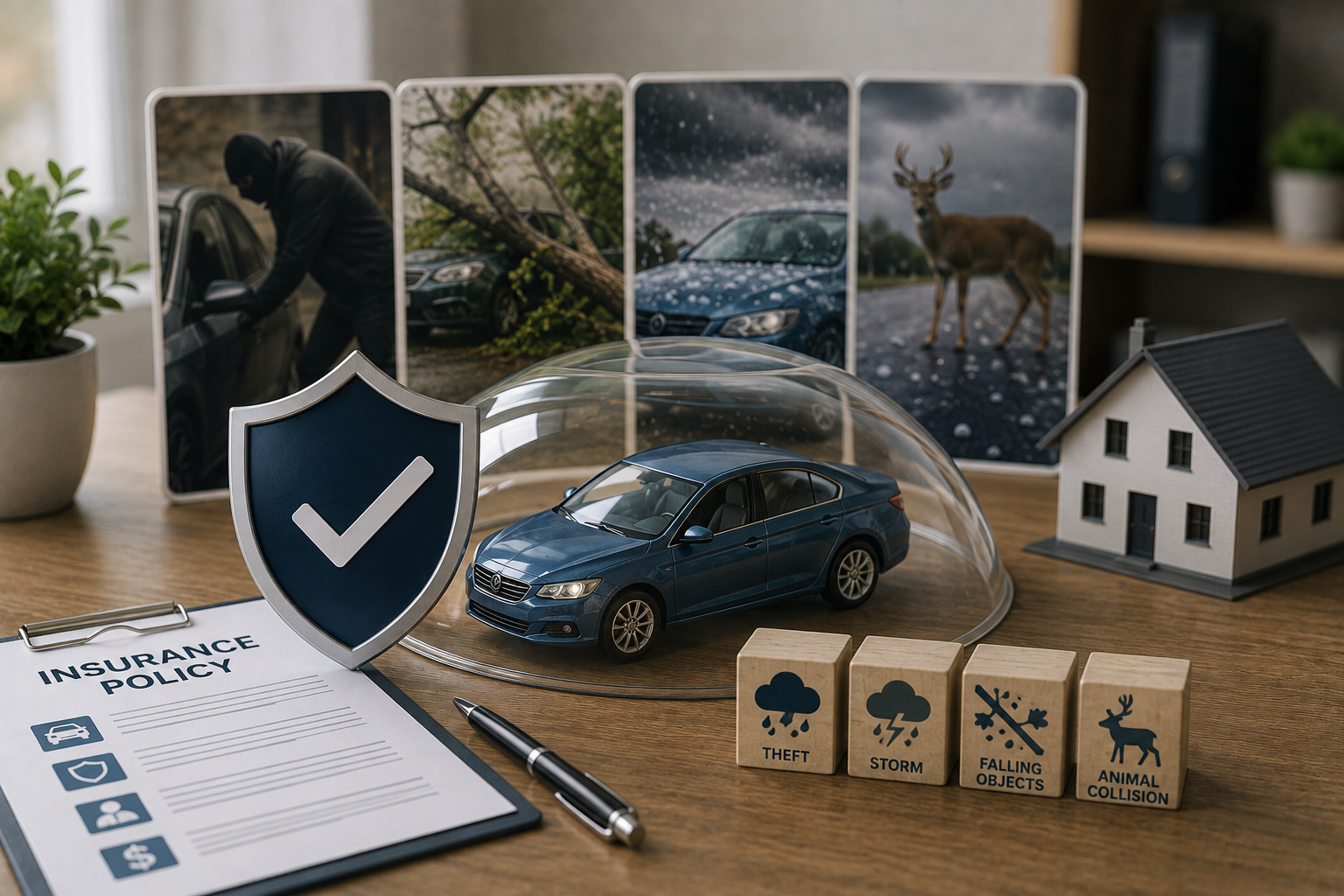
Comprehensive auto coverage generally pays for covered damage to your insured vehicle caused by events other than a collision, such as theft, fire, hail, vandalism, flooding, falling objects, broken glass, or contact with an animal. You normally choose a deductible, and the insurer pays the covered amount above that deductible, subject to the vehicle’s value, policy terms, exclusions, and applicable limits.
Key Takeaways
- Comprehensive generally covers many non-collision losses to your vehicle, including theft, fire, hail, vandalism, flood, falling objects, glass damage, and animal impacts.
- It is different from collision coverage, which generally addresses damage from crashes with another vehicle or object and certain rollover losses.
- A deductible usually applies, meaning you are responsible for the selected deductible amount on a covered claim before insurance pays the remaining covered loss.
- State law generally does not require comprehensive coverage, but a lender or leasing company may require it while you finance or lease a vehicle.
- Comprehensive does not mean that every type of damage is covered. Exclusions, vehicle valuation, deductibles, endorsements, and policy definitions still matter.
What Is Comprehensive Auto Insurance?
Comprehensive coverage is a type of physical damage coverage for your own insured vehicle. It is also sometimes described as “other than collision” coverage because it generally responds to covered losses that are not caused by a typical vehicle collision.
For example, if hail dents your vehicle, a tree branch falls on it, the vehicle is stolen, or an animal runs into the vehicle, comprehensive coverage may apply if the event is covered under your policy.
Despite its name, comprehensive insurance is not complete protection against every possible automotive loss. It does not replace liability, collision, uninsured or underinsured motorist coverage, personal injury protection, medical payments coverage, or other coverages that may appear on an auto policy.
Policy-language reminder: The exact definition of a comprehensive loss depends on the insurance contract. Always review the declarations page, coverage form, endorsements, deductible, exclusions, and any special provisions applying to your vehicle.
What Does Comprehensive Coverage Typically Cover?
Comprehensive coverage typically protects an insured vehicle against a range of sudden losses that are outside the driver’s control and are not classified as collisions under the policy. Common examples include:
- Theft: Loss of the insured vehicle after it is stolen, subject to policy requirements and the insurer’s claim investigation.
- Vandalism: Covered intentional damage caused by another person, such as scratched paint or broken vehicle glass.
- Fire: Vehicle damage caused by a covered fire.
- Severe weather: Covered damage from events such as hail or windstorms.
- Flood or water: Comprehensive may cover vehicle damage caused by flooding or certain other covered water events.
- Falling objects: Examples can include a tree branch or other object falling onto the vehicle.
- Animal impacts: Damage from striking a deer or another animal is generally handled under comprehensive rather than collision coverage.
- Glass damage: Broken vehicle glass, including windshield damage in many circumstances, may fall under comprehensive coverage.
Coverage for a specific incident still depends on how the policy defines the cause of loss and whether an exclusion, special deductible, endorsement, or other limitation applies.
How Does a Comprehensive Claim Work?
1. A Covered Event Damages the Vehicle
The process starts with a loss that potentially falls within comprehensive coverage. Examples could include hail damage, theft, vandalism, a falling tree limb, flooding, or an animal impact.
2. You Report the Claim
You report the loss to your insurer and provide the information it requests. Depending on the incident, this may include photographs, repair information, details about when and where the loss occurred, or a police report for theft or vandalism.
3. The Insurer Reviews Coverage and Damage
The insurer determines whether the loss is covered and evaluates the amount of damage. Claim handling can vary depending on the insurer, state rules, vehicle condition, repair options, policy language, and facts of the loss.
4. Your Deductible Is Applied
Comprehensive coverage generally has a deductible. The deductible is the portion of a covered loss you are responsible for before the insurer’s payment applies.
Hypothetical example: Assume a covered hailstorm causes $3,000 of eligible repair damage and the policy has a $500 comprehensive deductible. If the insurer approves the full $3,000 repair amount, the policy could pay $2,500 and the policyholder would be responsible for the $500 deductible.
These numbers are illustrative only. They are not national averages and are not recommended deductibles, repair costs, limits, or premiums.
5. The Vehicle Is Repaired or Treated as a Total Loss
If repair is appropriate, the insurer may pay the covered repair amount according to the policy and claim settlement process. If the vehicle is considered a total loss, settlement is generally based on the vehicle’s applicable value under the policy and state rules, rather than simply the amount you originally paid for the vehicle or the amount remaining on a loan.
Comprehensive vs. Collision Coverage
Comprehensive and collision both help protect your own vehicle, but they are designed for different types of losses.
| Type of Loss | Comprehensive | Collision |
|---|---|---|
| Vehicle is stolen | Generally applicable if covered | Generally not applicable |
| Hail damages the vehicle | Generally applicable | Generally not applicable |
| Driver hits another vehicle | Generally not applicable | Generally applicable to damage to your insured vehicle |
| Tree branch falls on the car | Generally applicable | Generally not applicable |
| Vehicle strikes a deer | Generally applicable | Generally not applicable |
| Driver backs into a pole | Generally not applicable | Generally applicable |
Both coverages commonly have deductibles. You may have different deductible amounts for comprehensive and collision, depending on the options offered by your insurer.
What Does Comprehensive Insurance Not Cover?
Comprehensive coverage is broad, but several losses generally fall outside its purpose or may be excluded by the policy.
- Collision damage: Damage from hitting another vehicle or object is generally handled under collision coverage instead.
- Liability to other people: Comprehensive does not replace bodily injury or property damage liability coverage.
- Your medical expenses: Comprehensive is vehicle physical-damage coverage, not medical coverage.
- Normal wear and tear: Routine deterioration, maintenance, and ordinary aging are generally not insured losses.
- Mechanical breakdown: A mechanical failure by itself is generally not covered simply because comprehensive insurance is on the vehicle.
- Personal belongings: Property such as a laptop, phone, or other personal item stolen from a car may not be covered as vehicle property under comprehensive coverage. Homeowners or renters coverage may apply depending on the policy.
- Certain custom equipment: Aftermarket equipment may be subject to restrictions, limits, or endorsement requirements depending on the policy.
Do not rely on the coverage name alone. Exclusions and limitations can differ by insurer, policy form, state, endorsement, vehicle use, and circumstances of the claim.
How Does the Comprehensive Deductible Work?
Your comprehensive deductible is the amount of a covered loss that you generally bear yourself. The deductible shown on your declarations page may apply each time you make a covered comprehensive claim, subject to the policy and any state-specific rules or special glass provisions.
A higher deductible can shift more of a future loss to you, while a lower deductible leaves less for you to pay on a covered claim. Deductible choices can also affect the premium charged for the coverage, although the impact depends on the insurer and other rating factors.
If the covered damage is less than or close to your deductible, there may be little or no insurer payment. For that reason, it is useful to choose a deductible you could reasonably handle if an unexpected loss occurred.
Is Comprehensive Coverage Required?
Comprehensive coverage is generally not required by state auto insurance laws. State requirements focus on coverages such as liability and, depending on the state, other required protections.
A lender or leasing company can impose different requirements. If you finance or lease a vehicle, the contract may require you to maintain both comprehensive and collision coverage to protect the lender’s or lessor’s financial interest in the vehicle.
After a loan is paid off, you may have more freedom to decide whether to continue carrying comprehensive coverage. That decision should consider the vehicle’s current value, the premium, your deductible, your ability to absorb a major loss, and the types of non-collision risks the vehicle faces.
When Might Comprehensive Coverage Make Sense?
There is no single vehicle age or dollar value at which comprehensive coverage automatically becomes worthwhile or unnecessary. The decision depends on your circumstances.
Factors worth reviewing include:
- Your vehicle’s current value: Consider how large a financial loss you could face if the vehicle were stolen or seriously damaged.
- The deductible: Compare the deductible with the amount of loss you could realistically expect the policy to absorb.
- The premium: Review what you are paying specifically for comprehensive coverage rather than looking only at the total auto premium.
- Your financial cushion: Consider whether you could repair or replace the vehicle yourself after theft, hail, fire, flood, or another major covered loss.
- Local risks: Weather, animal strikes, vehicle theft, vandalism, falling trees, and similar risks may affect how valuable the coverage feels to you.
- Loan or lease requirements: Your financing agreement may leave you little or no choice about maintaining the coverage.
What to Review Before Buying or Changing Coverage
Before adding, changing, or dropping comprehensive coverage, compare more than just the premium. Review the actual terms that determine what would happen after a claim.
- Confirm the comprehensive deductible shown on the declarations page.
- Review exclusions and any endorsements that change physical damage coverage.
- Ask how windshield and other glass claims are handled under the policy.
- Check whether custom equipment or aftermarket modifications need additional coverage.
- Understand how the insurer determines the vehicle’s value if it is declared a total loss.
- Remember that comprehensive and collision do not automatically provide rental reimbursement, towing, or gap protection.
- If the vehicle is financed or leased, review the contract before reducing or removing physical damage coverage.
Frequently Asked Questions
The Bottom Line
Comprehensive coverage helps protect your insured vehicle from many losses that are not caused by a conventional collision, including theft, hail, fire, vandalism, flooding, falling objects, glass damage, and animal impacts. A deductible generally applies to covered claims.
The biggest limitation is that “comprehensive” does not mean every type of loss is covered. Collision damage, liability claims, ordinary wear, maintenance, mechanical breakdown, and other excluded losses require different coverage or remain the vehicle owner’s responsibility.
Before buying, changing, or dropping the coverage, review your deductible, vehicle value, premium, exclusions, endorsements, financing requirements, and ability to absorb a major loss. Your declarations page and complete policy provide the controlling details for your coverage.
Sources
- National Association of Insurance Commissioners, Consumer Auto, accessed August 2026.
- National Association of Insurance Commissioners, What Does Auto Insurance Cover?, June 11, 2026.
- California Department of Insurance, Automobile Insurance Text Version, accessed August 2026.
- Texas Department of Insurance, Auto Insurance Glossary, accessed August 2026.