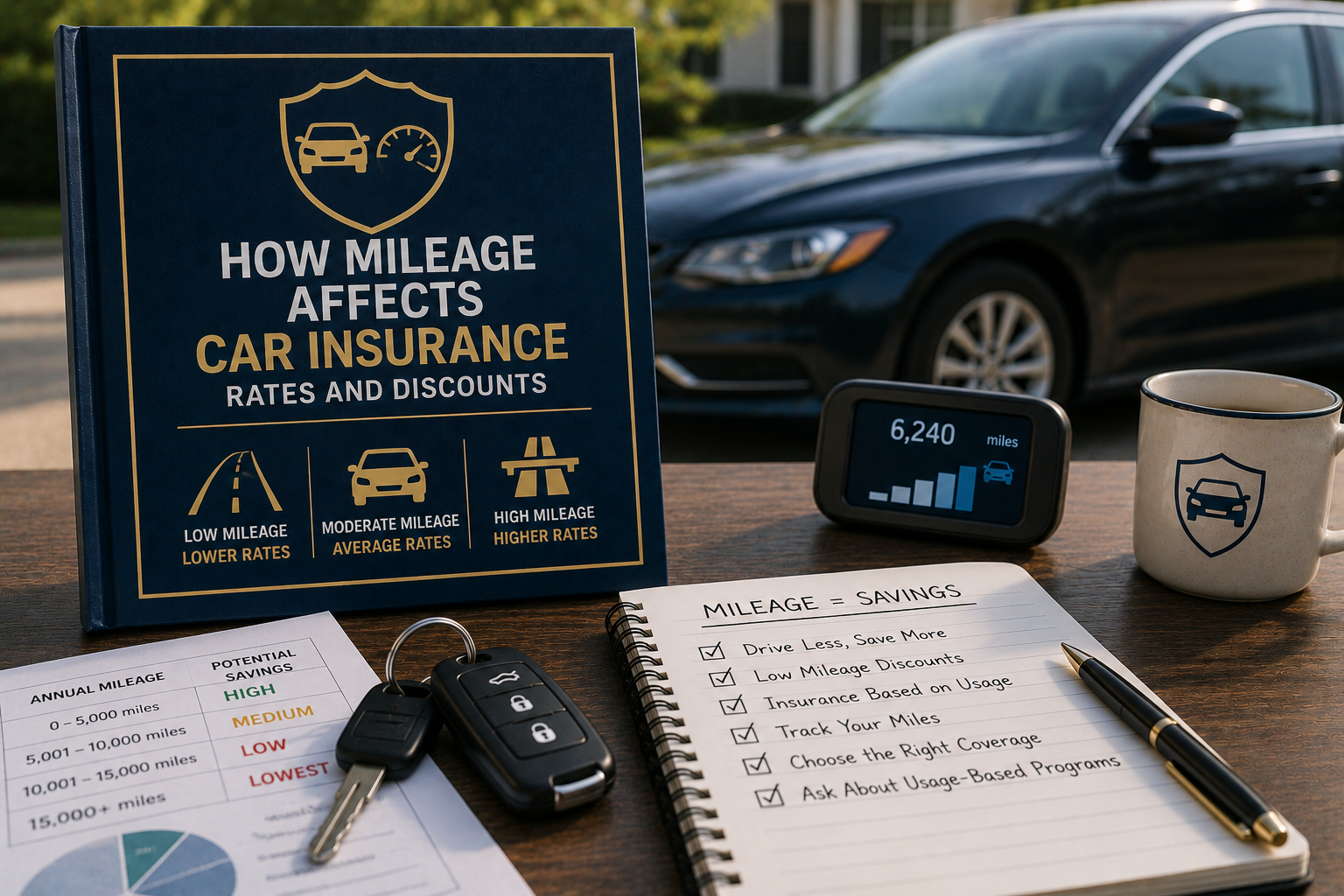
Annual mileage can affect car insurance rates because driving more generally means greater exposure to accidents and claims. Drivers who put fewer miles on a vehicle may qualify for lower rates or a low-mileage discount, while higher mileage may increase the premium. The effect is not universal or linear: insurers use different rating systems, state rules vary, and mileage is only one of several factors used to price coverage.
Key Takeaways
- Miles driven can be a car insurance rating factor. The NAIC identifies both vehicle use and miles driven among factors insurers may consider when pricing auto insurance.
- More mileage does not produce the same rate increase everywhere. Insurers use different rating plans, and state insurance rules affect which factors can be used and how they are applied.
- Low-mileage drivers may qualify for savings. Some insurers offer low-mileage discounts or lower mileage classifications, but eligibility and savings vary.
- Usage-based insurance can measure actual driving. Depending on the program, telematics may track mileage as well as braking, acceleration, time of day, and other driving information.
- Accurate mileage estimates matter. If your driving changes substantially because of remote work, retirement, relocation, or another reason, asking the insurer to review your annual mileage may affect your rate.
Why Does Mileage Affect Car Insurance Rates?
Car insurance pricing is based partly on the risk an insurer expects to assume. The National Association of Insurance Commissioners identifies miles driven and vehicle use among the main rating factors that may affect auto insurance premiums.
The basic insurance logic is exposure. A vehicle driven frequently spends more time on the road and has more opportunities to be involved in a crash or other covered event than an otherwise similar vehicle that is rarely driven. For that reason, higher annual mileage can be associated with a higher premium.
That does not mean every extra mile adds a fixed amount to the bill. Traditional insurance rating systems typically place mileage within a larger pricing formula. A driver moving from one insurer’s mileage category to another might experience a rate change, while a smaller change in annual miles might have little or no visible effect under a different rating plan.
Mileage is not the whole premium. Your driving record, location, vehicle, coverage choices, deductibles, claims history, vehicle use, and other legally permitted rating factors may also influence what you pay.
How Insurers Use Annual Mileage
When you request an auto insurance quote, the insurer may ask approximately how many miles the vehicle will be driven during the year. It may also ask how the vehicle is used, such as for commuting, pleasure, school, or business purposes.
Annual mileage and vehicle use are related but not identical. Two drivers can travel the same number of miles but use their vehicles differently. One might make a short commute every weekday, while the other drives mainly on weekends. An insurer’s approved rating system determines how such information affects the premium.
Estimated Annual Mileage
Traditional policies commonly rely on an estimate of expected annual mileage. The insurer may assign the vehicle to a mileage category or otherwise incorporate the estimate into its rating calculation. The exact categories and pricing effects are insurer-specific and subject to state insurance rules.
Actual Mileage
Some programs use actual mileage rather than relying only on an annual estimate. Mileage may be verified through odometer information, connected-vehicle data, a mobile application, or another telematics system, depending on the insurer and program.
California provides an example of how state rules can matter. The California Department of Insurance has identified estimated annual miles as a mandatory private-passenger auto rating factor under its state framework. Other states may regulate mileage and other rating variables differently.
Does Driving Less Lower Car Insurance Rates?
It can. NAIC consumer guidance notes that low mileage is among the discounts consumers may want to ask about, although not every insurer or state offers the same discounts. New York’s Department of Financial Services similarly advises consumers to ask insurers about possible low-annual-mileage discounts.
A reduction in driving may also place you into a different mileage classification even when the insurer does not market the change as a separate discount. How much you save, if anything, depends on the insurer’s approved rating system and your other rating characteristics.
Situations That May Reduce Your Annual Mileage
- Working from home full time or several days per week.
- Retiring and no longer commuting to work.
- Moving closer to work or school.
- Using public transportation for most commuting.
- Carpooling more frequently.
- Keeping a second vehicle that is driven only occasionally.
If your driving has changed, ask for a review. A substantial drop in annual mileage does not necessarily reduce your premium automatically. Contact the insurer or agent and ask whether the revised mileage changes your rating classification or qualifies you for a discount.
How Much Does Mileage Change Your Insurance Rate?
There is no reliable nationwide percentage that tells every driver how much the premium will rise or fall at a particular mileage level. Insurers do not all use the same mileage categories, rating formulas, discounts, or telematics programs, and state insurance laws can affect the factors available for pricing.
The impact of mileage can also be masked by changes in other parts of the premium. A driver may reduce annual mileage but still see the total renewal premium increase because repair costs, claims trends, vehicle characteristics, location, coverage limits, or other rating factors have changed.
Be cautious with universal savings claims. Statements such as “driving under a certain number of miles always saves a fixed percentage” should not be assumed to apply nationally. Ask the insurer how mileage is treated in the specific policy and state.
Traditional Mileage Rating vs. Usage-Based Insurance
Drivers who put relatively few miles on a vehicle may have more than one way to receive mileage-sensitive pricing. Traditional insurance can use estimated annual mileage as one rating factor, while usage-based insurance can use actual mileage and, depending on the program, other driving behaviors.
| Pricing Approach | How Mileage May Be Used | What to Review |
|---|---|---|
| Traditional auto insurance | Estimated annual mileage may be included with other rating factors. | Mileage classification, vehicle use, discounts, and when mileage is updated. |
| Usage-based insurance | Actual miles may be monitored along with driving behavior. | What data is collected, how it affects price, and privacy considerations. |
| Pay-per-mile insurance | Some programs use a fixed base amount plus a mileage-based charge. | Per-mile calculation, base premium, verification method, availability, and policy terms. |
How Usage-Based Insurance Tracks Mileage
Usage-based insurance, often associated with telematics, uses information about how or how much a vehicle is driven. According to the NAIC, telematics technology may operate through a mobile application, a device installed in the vehicle, or technology already built into the vehicle.
Mileage can be only one part of the data. Depending on the program, insurers may also measure factors such as:
- Time of day the vehicle is driven.
- Rapid acceleration.
- Hard braking.
- Hard cornering.
- Location information when the technology and program use GPS.
- Other driving information permitted under the program and applicable rules.
This distinction matters for low-mileage drivers. Driving fewer miles does not necessarily guarantee a favorable telematics result if the program also evaluates other behaviors. Before enrolling, ask exactly which information affects the premium and whether participation can result in a higher price as well as a lower one.
Consider data collection before enrolling. Telematics programs can collect more information than a simple annual mileage estimate. Review the insurer’s program terms and privacy disclosures so you understand what is collected and how it may be used.
What Is Pay-Per-Mile Car Insurance?
Pay-per-mile insurance is a mileage-sensitive form of auto insurance available from some insurers in some states. NAIC consumer material describes programs in which an insurer may charge a base rate and add a per-mile amount based on actual driving.
This structure may be worth comparing for a person who drives infrequently, works from home, relies heavily on public transportation, or owns a vehicle that spends much of the year parked. It is not automatically the cheapest option. The base premium, mileage charge, driver characteristics, vehicle, coverage selections, state availability, and other policy terms still matter.
Drivers should compare the expected total cost of a pay-per-mile policy with a traditional policy rather than looking only at the advertised per-mile component.
How Do Insurance Companies Verify Mileage?
Verification practices vary. An insurer may ask the policyholder to report expected annual mileage or provide information that helps establish vehicle use. Programs based on actual driving may use odometer readings or telematics data.
Depending on the insurer and program, mileage information may come from:
- A mileage estimate supplied during an application or renewal.
- Odometer readings or photographs submitted by the policyholder.
- A mobile telematics application.
- A plug-in vehicle device.
- Connected technology built into a vehicle.
The total number displayed on an odometer is not the same thing as annual mileage. The odometer shows cumulative vehicle mileage. Comparing readings taken at different times can help establish how far the vehicle was driven during a particular period.
Why Accurate Mileage Information Matters
Consumers should provide a reasonable and accurate mileage estimate rather than intentionally understating how much they drive to obtain a lower quote. NAIC consumer guidance advises policyholders to be honest about annual mileage when applying for or discussing coverage with an insurer.
If your actual use changes, contact the insurer and ask how the policy should be updated. An insurer may treat a temporary change differently from a long-term change, and the exact consequences of inaccurate information depend on applicable state law, policy terms, underwriting rules, and the facts involved.
The goal is not to predict your mileage perfectly. It is to provide the insurer with information that reasonably reflects how the vehicle is expected to be used and to correct material changes when appropriate.
Mileage vs. Other Car Insurance Rating Factors
Mileage can affect a premium without being the dominant factor in every policy. NAIC guidance identifies a range of rating considerations used in auto insurance, subject to state rules.
| Factor | Why It May Matter |
|---|---|
| Miles driven | Can affect the amount of exposure a vehicle has on the road. |
| Vehicle use | Commuting, pleasure, and business use can present different exposures. |
| Driving record | Accidents and violations may affect the insurer’s assessment of risk. |
| Location | Claim experience, traffic, theft, and other risks can vary by territory. |
| Vehicle type | Repair costs, theft experience, performance, and claim severity can vary by vehicle. |
| Coverage and deductibles | Higher limits, optional coverages, and deductible choices change the protection purchased and premium charged. |
State law can restrict or regulate particular rating variables. As a result, a factor that affects a premium in one state may be used differently or not permitted in the same way elsewhere.
When to Update Your Annual Mileage
Reviewing mileage makes particular sense when your normal driving pattern changes materially. Instead of assuming the insurer will notice the change automatically, contact the company or agent and ask whether updated mileage would affect your classification or discount eligibility.
A Commute Ends or Changes
Switching to remote work, taking a job closer to home, or beginning to use public transportation can substantially reduce annual driving.
You Retire
Retirement may eliminate regular commuting. If expected annual mileage falls, ask whether the insurer offers different mileage treatment or a discount.
You Begin Driving Much More
A new long commute, frequent road travel, or a major change in vehicle use can increase annual mileage. If the vehicle begins to be used for business, delivery, rideshare, or another activity beyond ordinary personal use, notify the insurer because the issue may involve more than mileage alone.
How to Shop for Car Insurance Based on Mileage
1. Estimate Your Mileage Realistically
Check your normal commute, regular errands, school trips, weekend travel, and longer trips. If available, previous odometer readings or service records may help you estimate how many miles you actually drive in a typical year.
2. Ask How Each Insurer Treats Low Mileage
Do not assume every insurer defines low mileage the same way. Ask whether mileage affects the base rating calculation, qualifies for a separate discount, or both.
3. Compare Telematics Carefully
If a usage-based program is offered, determine whether it measures mileage alone or also evaluates braking, acceleration, driving time, location, phone use, or other behaviors. Ask how the information can change the premium.
4. Request Comparable Quotes
Use the same drivers, vehicles, liability limits, collision and comprehensive choices, deductibles, and other major coverage selections when comparing insurers. Otherwise, a lower premium may simply reflect less coverage rather than favorable mileage pricing.
5. Check the Policy Information After Purchase
Review the information used to rate the policy and report errors promptly. State regulator guidance, including New York’s consumer guidance, encourages drivers to verify that policy rating information and applicable discounts are correct.
Frequently Asked Questions
The Bottom Line
Mileage can affect car insurance rates because it is one measure of how much exposure a vehicle has on the road. Drivers who travel fewer miles may qualify for a lower mileage classification, discount, usage-based program, or pay-per-mile option, depending on the insurer and state.
The main limitation is that there is no nationwide mileage threshold or standard savings percentage. A driver’s total premium reflects multiple rating factors, and telematics programs may evaluate driving behavior in addition to distance.
If your driving has changed significantly, review the mileage listed or estimated for your policy and ask your insurer how a lower or higher annual mileage figure affects your rate. When comparing quotes, keep coverage limits and deductibles consistent so you can see whether one insurer actually prices your driving pattern more favorably.
Sources
- National Association of Insurance Commissioners, Auto Insurance, accessed August 2026.
- National Association of Insurance Commissioners, Consumer Auto Insurance, accessed August 2026.
- National Association of Insurance Commissioners, Telematics, last updated October 23, 2023.
- New York State Department of Financial Services, Discounts and Saving Money, accessed August 2026.
- California Department of Insurance, Notice Regarding Annual Miles as an Automobile Rating Factor, November 8, 2002.